Ferrari Luce, Inside The Light
How Ferrari and LoveFrom built the first car interior that doesn't ask you to choose between feeling and information.
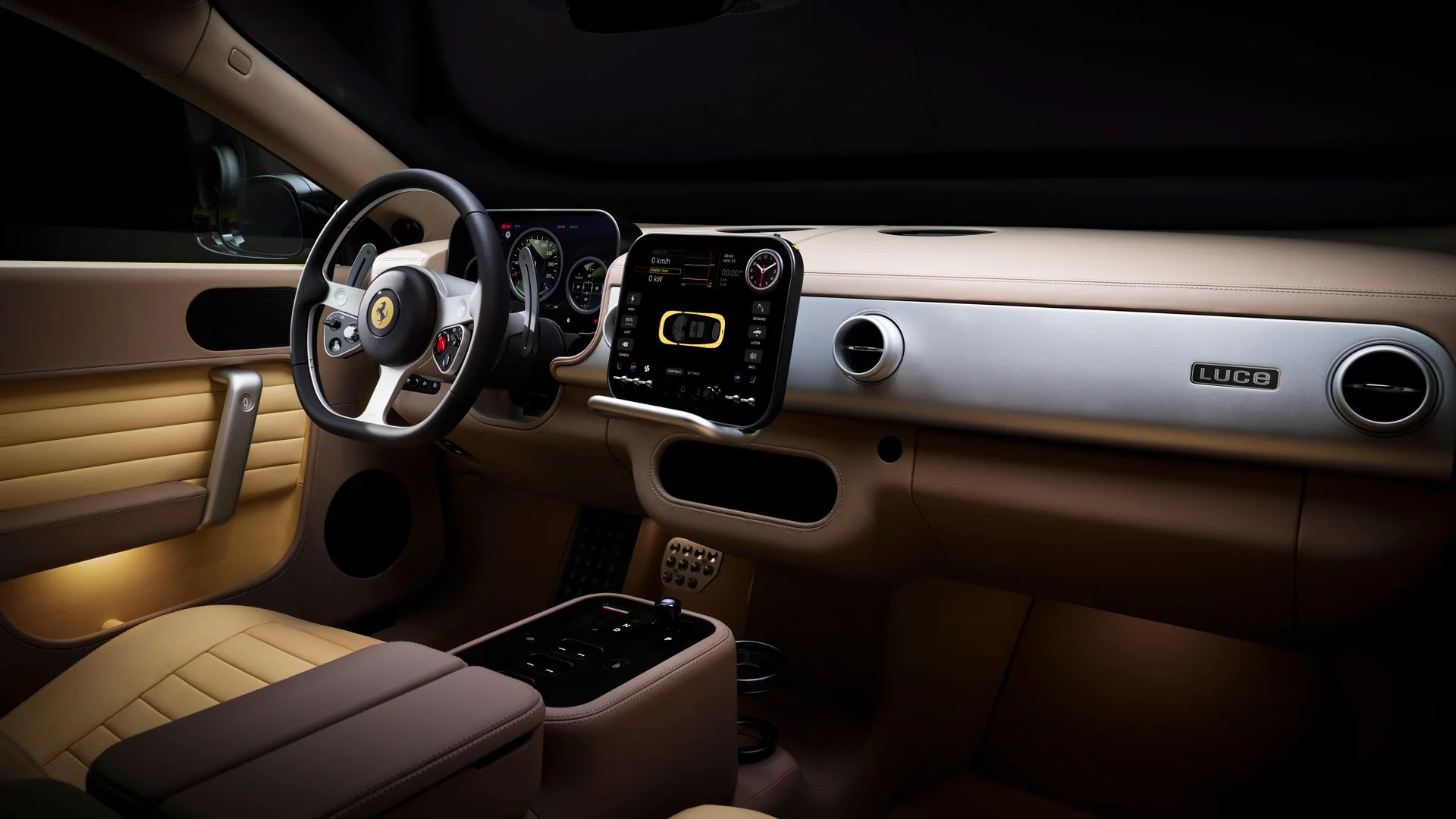
The Ferrari Luce interior. Designed by LoveFrom in collaboration with Ferrari's Centro Stile.
Most car interiors ask you to make a choice. Buttons or screens. Feeling or information. The past or the present.
The Ferrari Luce does not ask.
Sit in it before the key is docked and the interior is already composed. Three dials sit in a binnacle ahead of the driver, their aluminium bezels catching light at the edge. A three-spoke steering wheel, machined from recycled aluminium and hand-finished, occupies the centre of the visual field. There is no screen embedded in it. There is no screen competing for attention from the console. What you see is a cockpit that has been edited rather than filled, and the editing has the quality of someone who understood what to remove because they understood what mattered. This is the work of LoveFrom, the creative collective founded by Jony Ive and Marc Newson in 2019, working in close collaboration with Ferrari's own teams. Their brief was simplification in service of the driving experience. Not minimalism as an aesthetic position. Simplification as a functional one. The Luce was unveiled in Rome on 25 May 2026, seventy-nine years to the day after Franco Cortese drove the 125 S to Ferrari's first competitive victory in the same city. The date was not incidental.
The tension they were asked to resolve is not new. Every significant attempt to integrate digital information into a car interior over the past two decades has landed in the same place: a touchscreen pretending to be a physical control, or a physical control pretending that digital information doesn't exist. The Luce takes a different position. It treats the two not as competing systems to be balanced, but as aspects of the same object.
“A cockpit that has been edited rather than filled. The editing has the quality of someone who understood what to remove because they understood what mattered.”
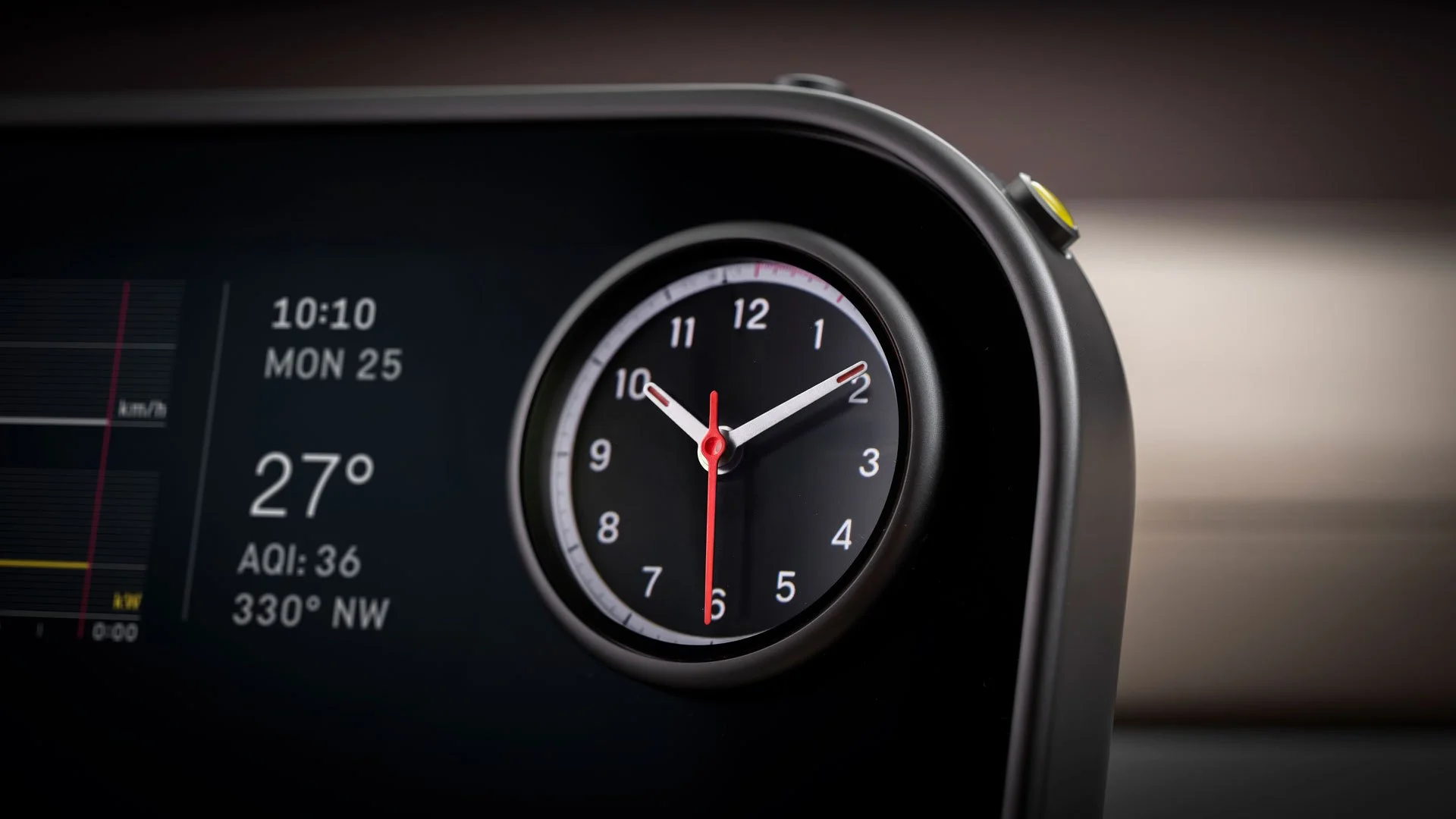
The Multigraph makes this argument most directly. It is a clock, mounted in the instrument cluster, that combines a mechanical analogue needle with a digital face. It can be switched between time, compass, and a sixty-second stopwatch. The needle and the digital display are not layered on top of each other as a styling gesture. They read from the same source. The analogue and digital layers are the same object, expressing the same information through two registers simultaneously. There is no simulation involved. The needle moves on a real pivot. The digital face updates in real time. Neither is decorating the other.
The binnacle carries the same logic across three dials, each with a precision-machined glass lens. The central dial reads speed and battery level through a mechanical needle on an actual pivot, backed by a digital face. The needle is not a graphic. It is a physical component moving through physical space, driven by actual data. The distinction matters because the experience of reading it is different. A needle that moves is perceived differently from a number that changes. Ferrari and LoveFrom understood this and built accordingly.
“The needle is not a graphic. It is a physical component moving through physical space, driven by actual data.”
The glass key arrives as its own object. Engineered from Corning Gorilla Glass, it carries an E Ink display, a technology that consumes energy only when it changes state, not while it holds an image. When the key is docked, Ferrari yellow surges from it across the entire interface. It is the first time this has been done in any production car. The key is not a token or a fob. It is the initiating object, the thing that begins the relationship between driver and machine, and it has been designed to feel like one.
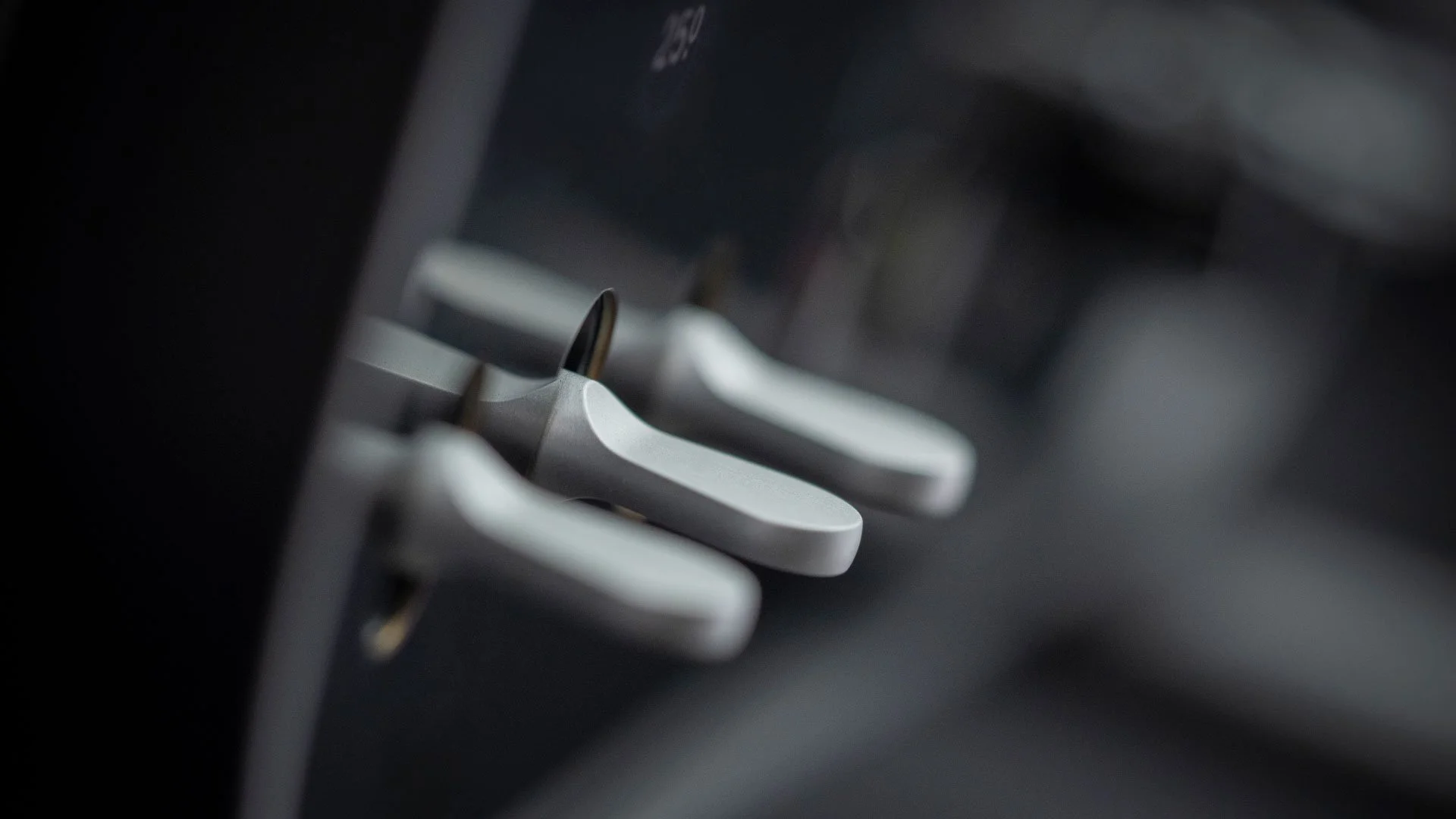
The torque control paddles address a different problem. In a fully electric car, paddles mounted behind the steering wheel have no gear to change. The conventional response has been to remove them or to leave them as vestigial objects, present for familiarity but stripped of meaning. Ferrari and LoveFrom gave them a new function and a new grammar. The right paddle controls five levels of power delivery. The left controls five levels of regenerative braking. Each detent is magnetic, with a resistance that is deliberate and precise. The paddles do not simulate a gearchange. They define something else: a physical conversation with an electric powertrain that has no prior vocabulary. The driver is not being asked to pretend. They are being given something new to learn.
The steering wheel, the one surface in the car that remains entirely physical, anchors the whole. No screen. No haptic display. No embedded controls beyond what the hands need. It was machined from a hundred percent recycled aluminium and finished by hand. It is the point of contact that everything else is organised around, and it has been left alone.
“The driver is not being asked to pretend. They are being given something new to learn.”
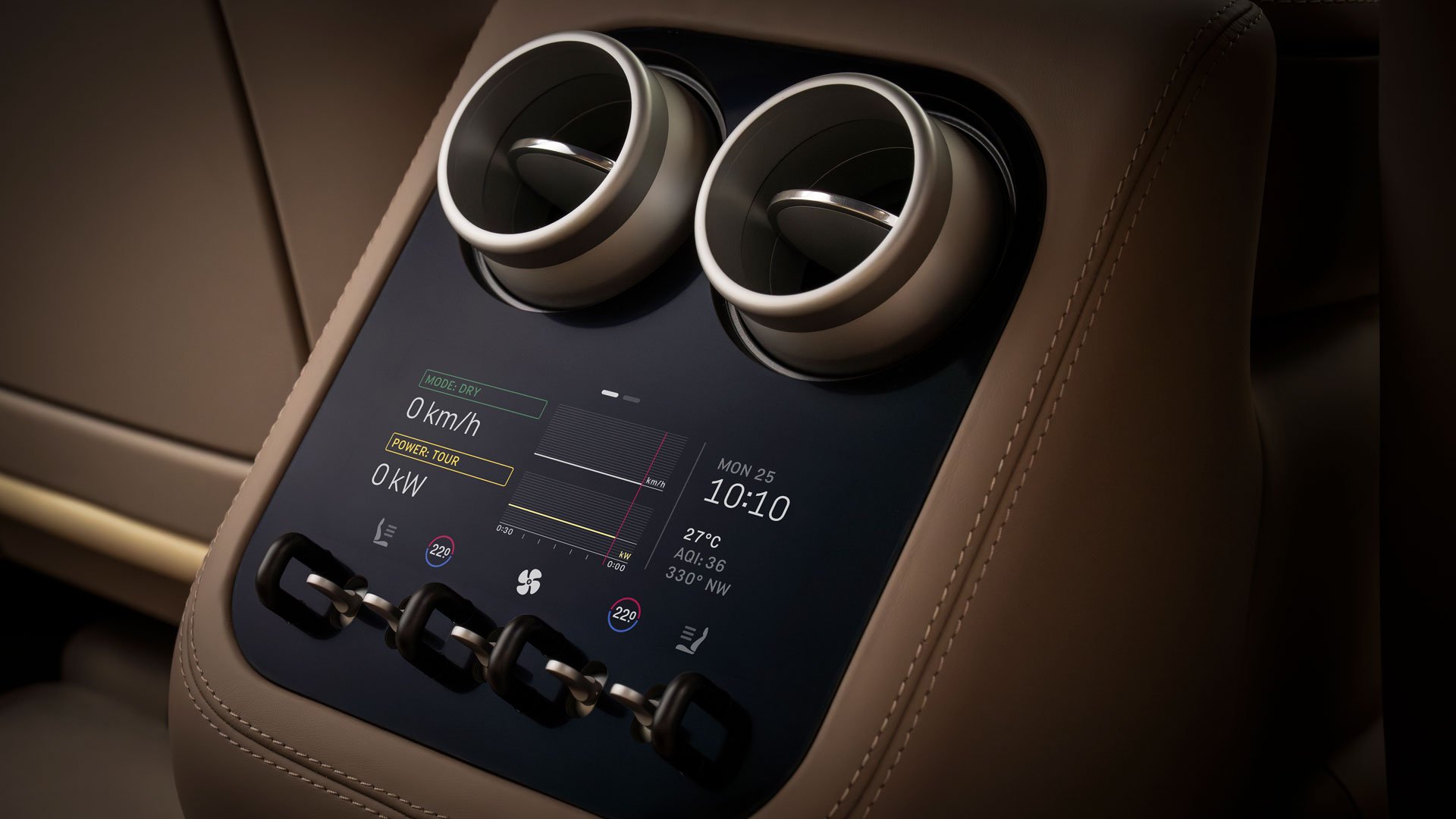
The air vents extend this logic to a detail most manufacturers treat as purely functional. From the dashboard to the rear cabin, the circular aluminium vents operate on a twist mechanism, their resistance calibrated with the same attention given to the paddles, the key, the shifter. In the rear, they are given generous scale, almost sculptural in proportion against the leather of the console, sitting above the passenger display and climate controls. Every surface where a hand might reach has been asked the same question. The answer is consistent throughout.
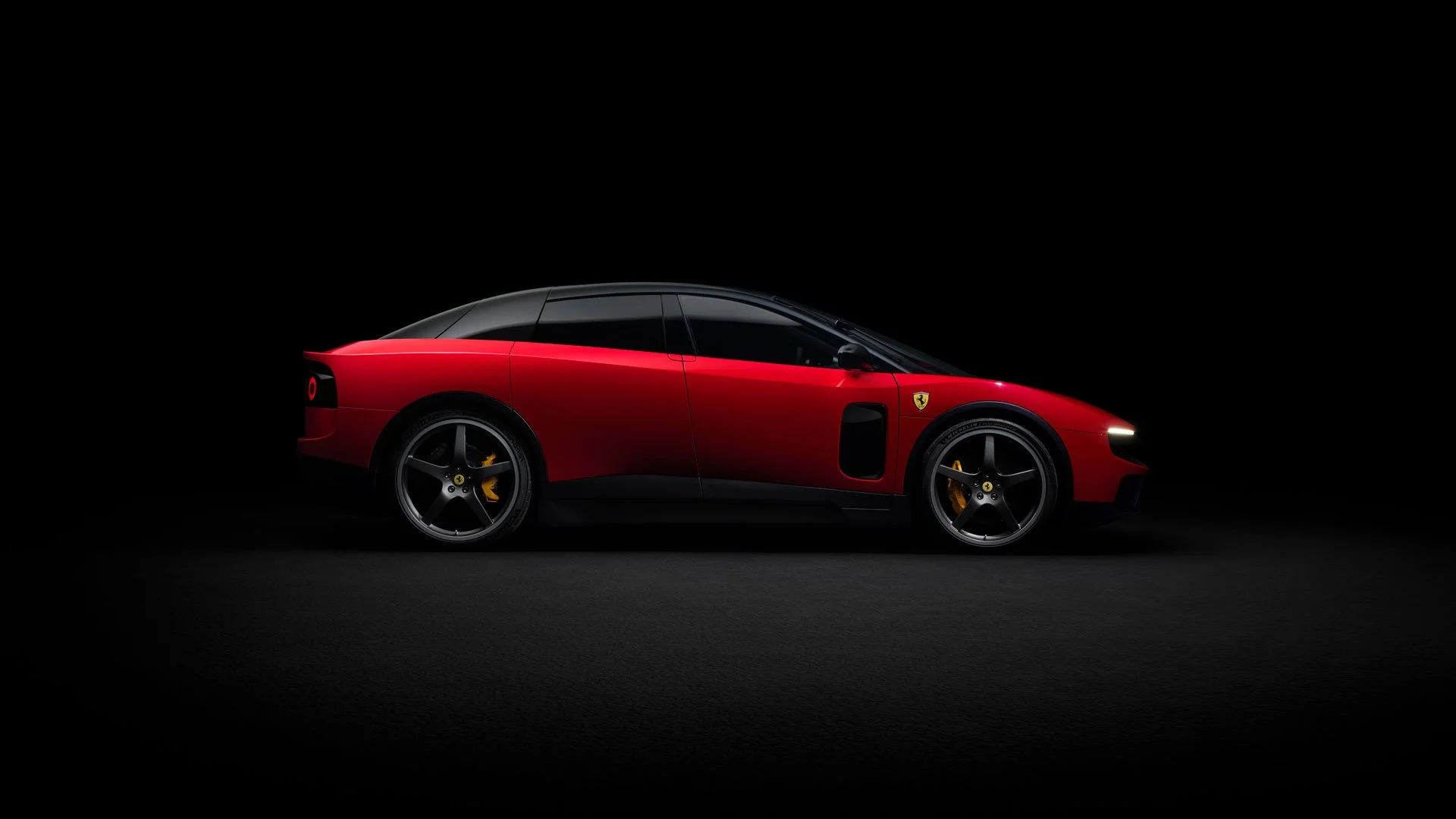
The sound system required five years of development and forty thousand kilometres of dedicated testing. A precision accelerometer is mounted on the rear axle housing. It picks up the mechanical vibration of the rotating components, the electric machines, the gears, and transmits that signal into the cabin in the same way an electric guitar pickup reads the vibration of a string. The sound is not composed. It is not synthesised. It is not a reference to combustion. It comes from the actual mechanics of the car, and it changes with speed, with load, with the micro-variations of the drivetrain under different conditions. When the car settles into a long curve and the axle registers the slight redistribution of load, the sound shifts with it, a fraction lower, a fraction fuller, then returns. It cannot be reproduced in another car because it comes from this one.
“The sound is not composed. It is not synthesised. It is not a reference to combustion. It comes from the actual mechanics of the car.”
The accelerometer on the rear axle is reading the rotation of components. The signal is travelling into the cabin. The sound it makes has never existed before. You have not heard it yet.
Rolling Standard
Images courtesy of Ferrari S.p.A. and LoveFrom. All rights reserved.