The revolution is yours to adjust.
The roads taken, the machines kept,
the people who know why.
People Machines Movement
Featured Posts


Machines at
Rest
What remains after the last journey.
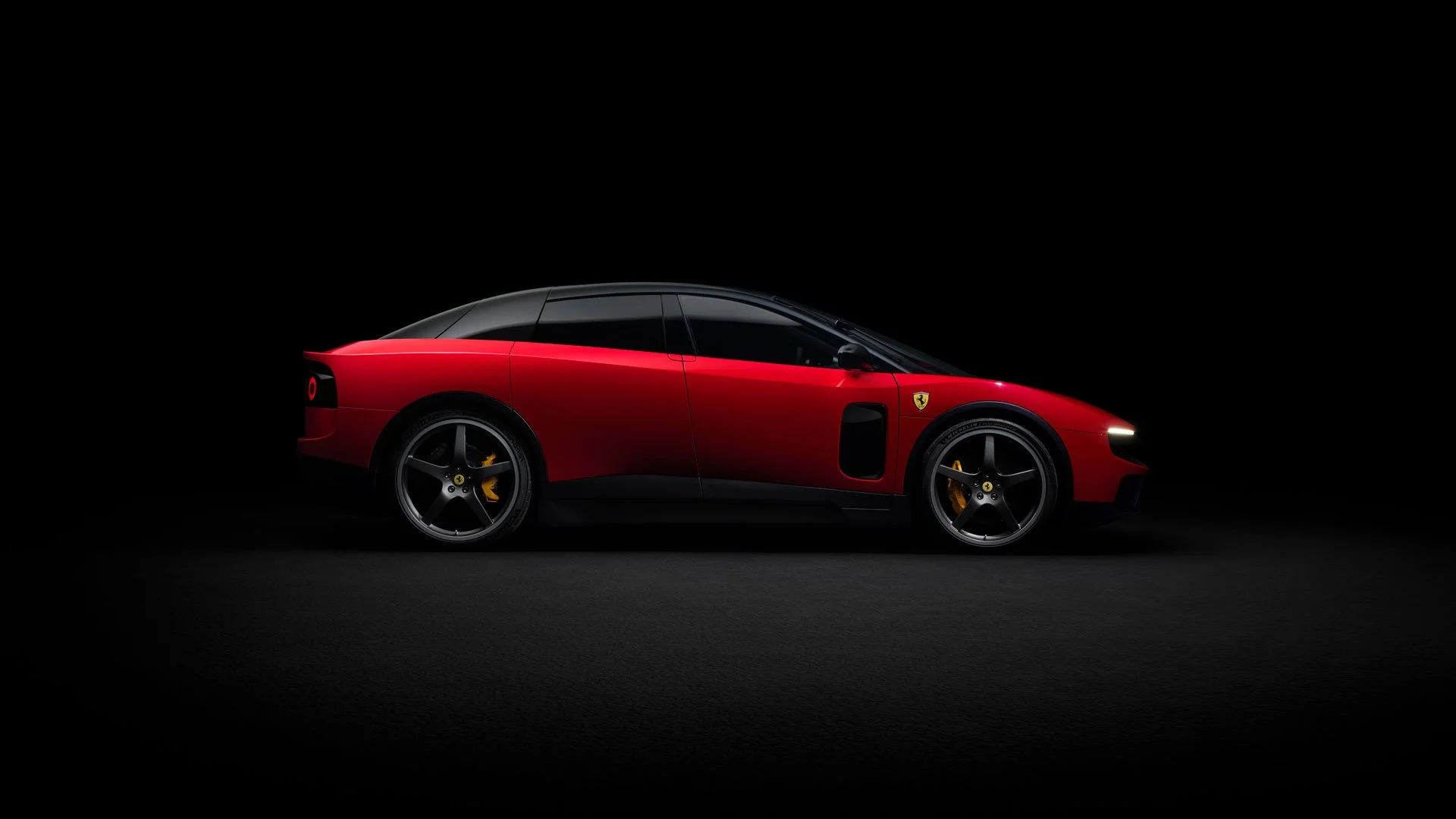
Ferrari Luce, Inside The Light
Ferrari's first electric car has divided opinion on the outside. Inside, it is a different conversation entirely. The Luce is the first car interior that doesn't ask the driver to choose between feeling and information, and every detail from the Multigraph clock to the torque paddles to the rear cabin vents makes the same argument.
How Ferrari and LoveFrom built the first car interior that doesn't ask you to choose between feeling and information.
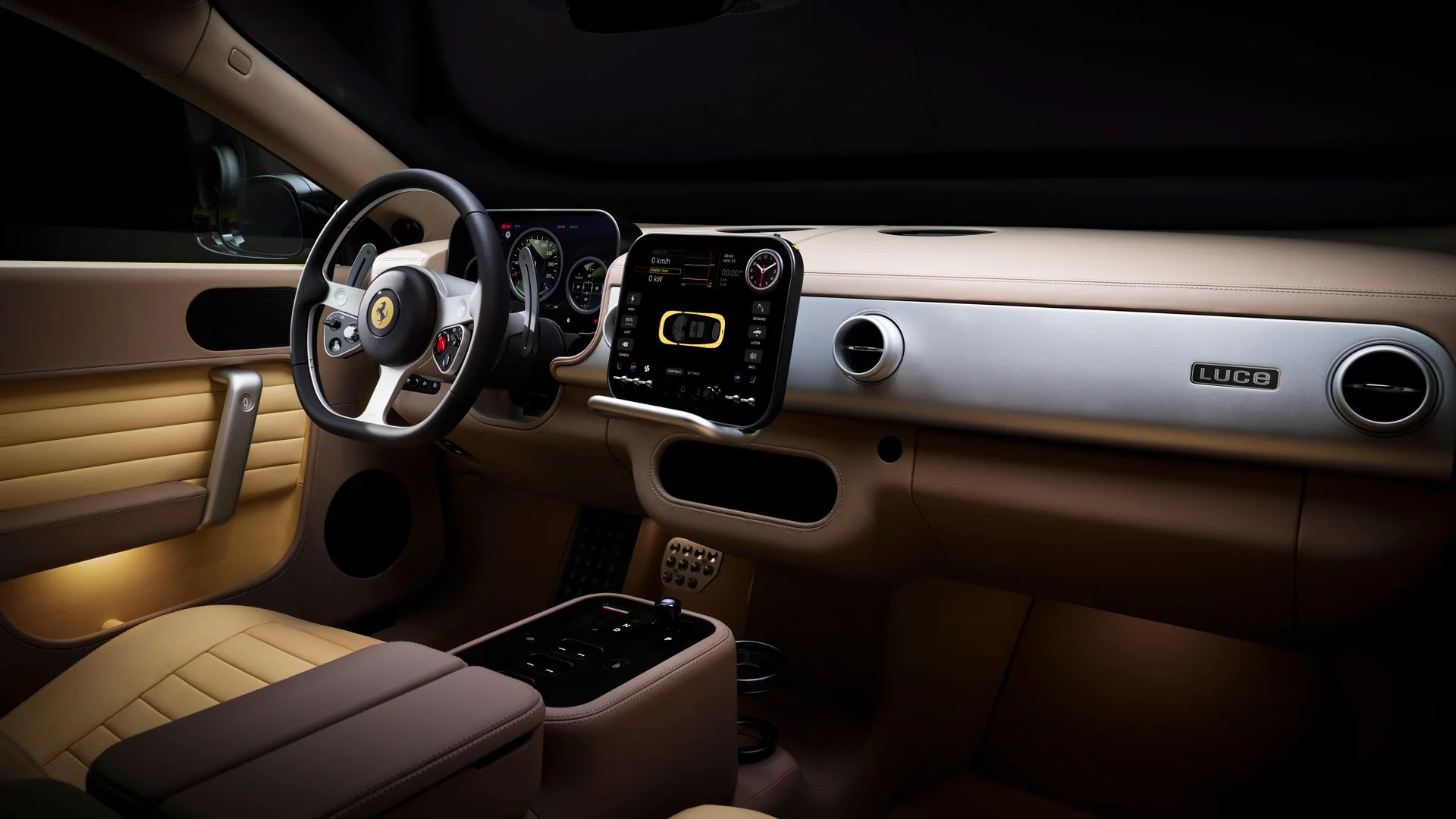
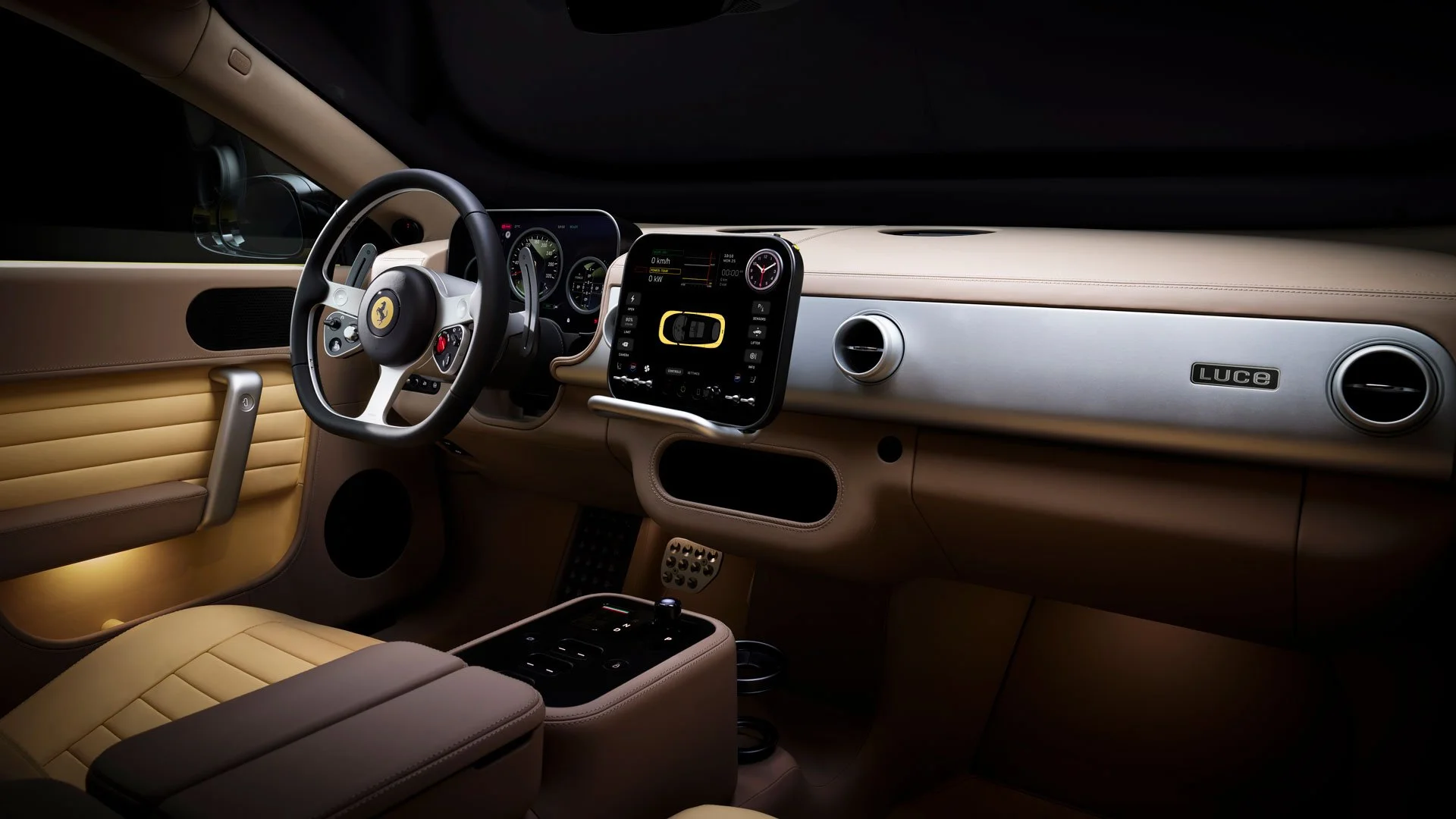
The Ferrari Luce interior. Designed by LoveFrom in collaboration with Ferrari's Centro Stile.
Most car interiors ask you to make a choice. Buttons or screens. Feeling or information. The past or the present.
The Ferrari Luce does not ask.
Sit in it before the key is docked and the interior is already composed. Three dials sit in a binnacle ahead of the driver, their aluminium bezels catching light at the edge. A three-spoke steering wheel, machined from recycled aluminium and hand-finished, occupies the centre of the visual field. There is no screen embedded in it. There is no screen competing for attention from the console. What you see is a cockpit that has been edited rather than filled, and the editing has the quality of someone who understood what to remove because they understood what mattered. This is the work of LoveFrom, the creative collective founded by Jony Ive and Marc Newson in 2019, working in close collaboration with Ferrari's own teams. Their brief was simplification in service of the driving experience. Not minimalism as an aesthetic position. Simplification as a functional one. The Luce was unveiled in Rome on 25 May 2026, seventy-nine years to the day after Franco Cortese drove the 125 S to Ferrari's first competitive victory in the same city. The date was not incidental.
The tension they were asked to resolve is not new. Every significant attempt to integrate digital information into a car interior over the past two decades has landed in the same place: a touchscreen pretending to be a physical control, or a physical control pretending that digital information doesn't exist. The Luce takes a different position. It treats the two not as competing systems to be balanced, but as aspects of the same object.
“A cockpit that has been edited rather than filled. The editing has the quality of someone who understood what to remove because they understood what mattered.”
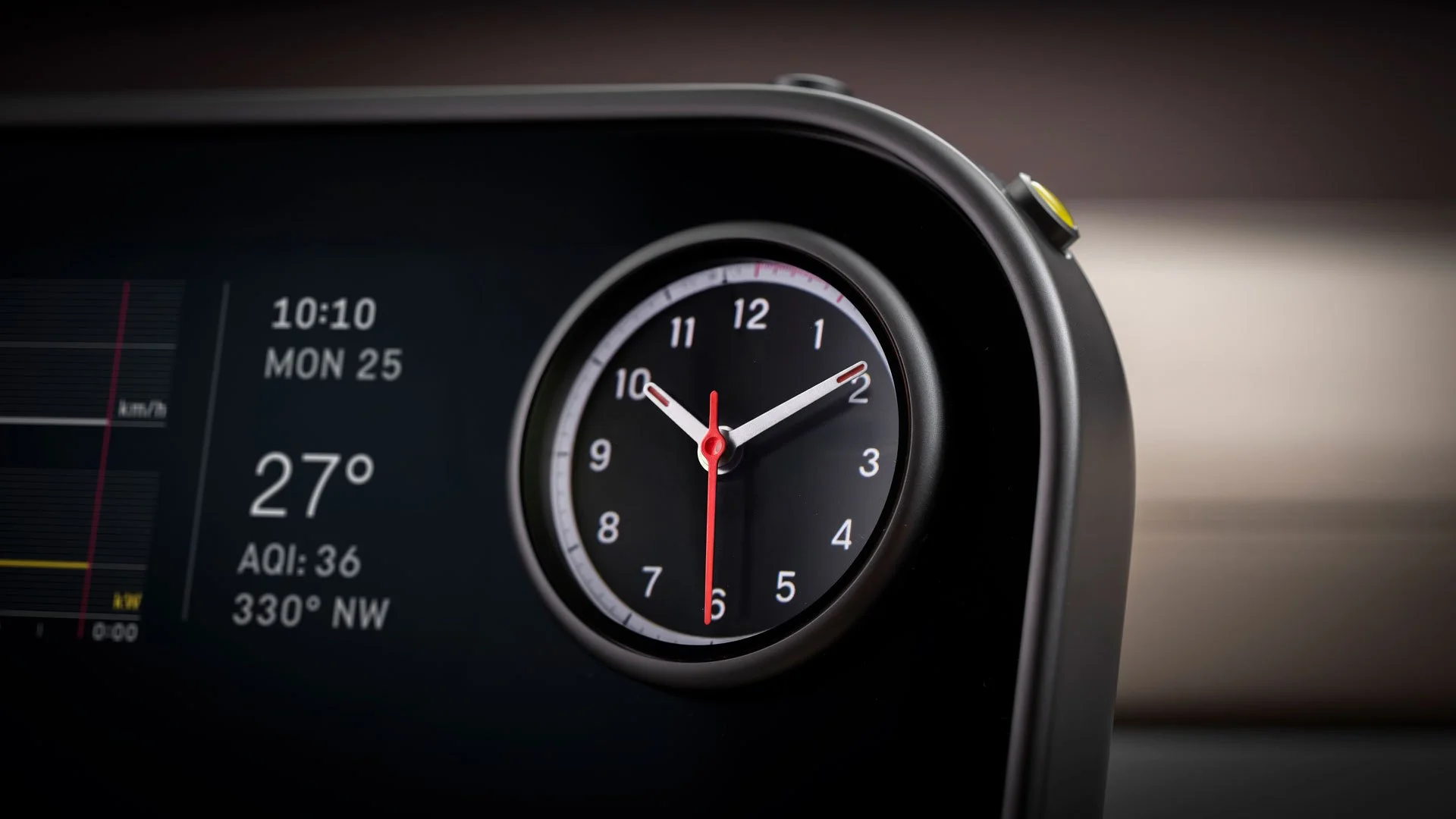
The Multigraph makes this argument most directly. It is a clock, mounted in the instrument cluster, that combines a mechanical analogue needle with a digital face. It can be switched between time, compass, and a sixty-second stopwatch. The needle and the digital display are not layered on top of each other as a styling gesture. They read from the same source. The analogue and digital layers are the same object, expressing the same information through two registers simultaneously. There is no simulation involved. The needle moves on a real pivot. The digital face updates in real time. Neither is decorating the other.
The binnacle carries the same logic across three dials, each with a precision-machined glass lens. The central dial reads speed and battery level through a mechanical needle on an actual pivot, backed by a digital face. The needle is not a graphic. It is a physical component moving through physical space, driven by actual data. The distinction matters because the experience of reading it is different. A needle that moves is perceived differently from a number that changes. Ferrari and LoveFrom understood this and built accordingly.
“The needle is not a graphic. It is a physical component moving through physical space, driven by actual data.”
The glass key arrives as its own object. Engineered from Corning Gorilla Glass, it carries an E Ink display, a technology that consumes energy only when it changes state, not while it holds an image. When the key is docked, Ferrari yellow surges from it across the entire interface. It is the first time this has been done in any production car. The key is not a token or a fob. It is the initiating object, the thing that begins the relationship between driver and machine, and it has been designed to feel like one.
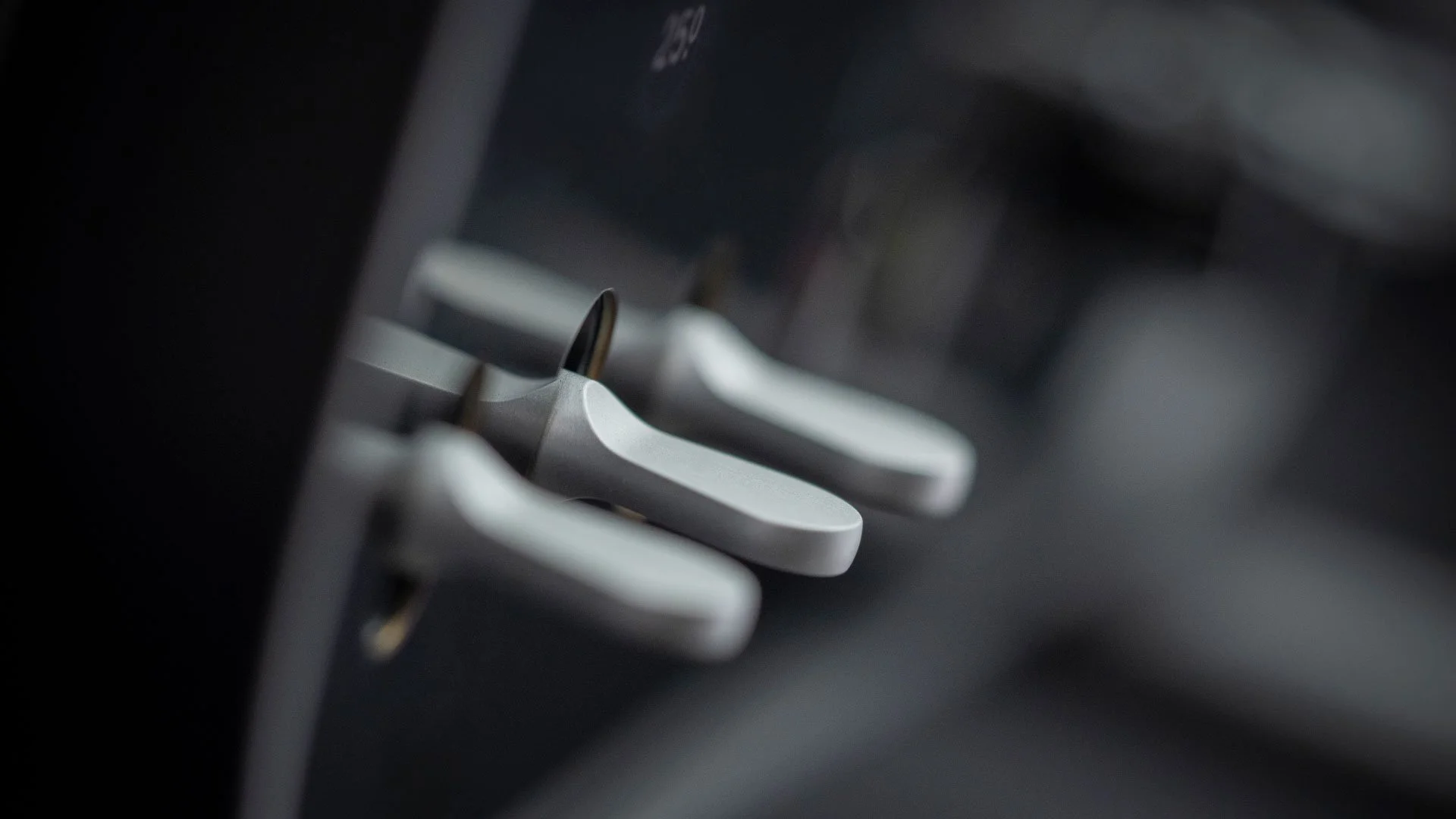
The torque control paddles address a different problem. In a fully electric car, paddles mounted behind the steering wheel have no gear to change. The conventional response has been to remove them or to leave them as vestigial objects, present for familiarity but stripped of meaning. Ferrari and LoveFrom gave them a new function and a new grammar. The right paddle controls five levels of power delivery. The left controls five levels of regenerative braking. Each detent is magnetic, with a resistance that is deliberate and precise. The paddles do not simulate a gearchange. They define something else: a physical conversation with an electric powertrain that has no prior vocabulary. The driver is not being asked to pretend. They are being given something new to learn.
The steering wheel, the one surface in the car that remains entirely physical, anchors the whole. No screen. No haptic display. No embedded controls beyond what the hands need. It was machined from a hundred percent recycled aluminium and finished by hand. It is the point of contact that everything else is organised around, and it has been left alone.
“The driver is not being asked to pretend. They are being given something new to learn.”
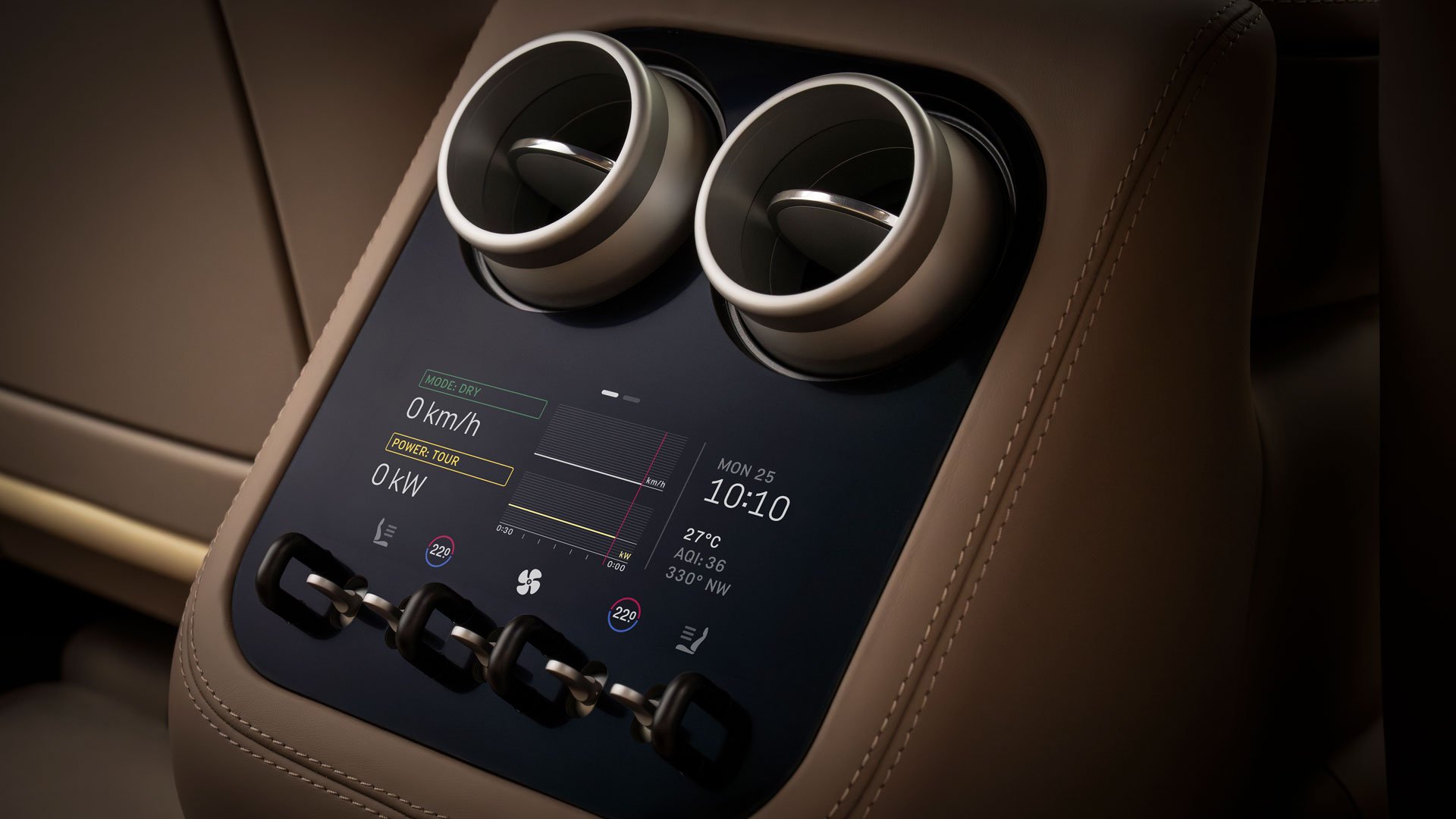
The air vents extend this logic to a detail most manufacturers treat as purely functional. From the dashboard to the rear cabin, the circular aluminium vents operate on a twist mechanism, their resistance calibrated with the same attention given to the paddles, the key, the shifter. In the rear, they are given generous scale, almost sculptural in proportion against the leather of the console, sitting above the passenger display and climate controls. Every surface where a hand might reach has been asked the same question. The answer is consistent throughout.
The sound system required five years of development and forty thousand kilometres of dedicated testing. A precision accelerometer is mounted on the rear axle housing. It picks up the mechanical vibration of the rotating components, the electric machines, the gears, and transmits that signal into the cabin in the same way an electric guitar pickup reads the vibration of a string. The sound is not composed. It is not synthesised. It is not a reference to combustion. It comes from the actual mechanics of the car, and it changes with speed, with load, with the micro-variations of the drivetrain under different conditions. When the car settles into a long curve and the axle registers the slight redistribution of load, the sound shifts with it, a fraction lower, a fraction fuller, then returns. It cannot be reproduced in another car because it comes from this one.
“The sound is not composed. It is not synthesised. It is not a reference to combustion. It comes from the actual mechanics of the car.”
The accelerometer on the rear axle is reading the rotation of components. The signal is travelling into the cabin. The sound it makes has never existed before. You have not heard it yet.
Rolling Standard
Images courtesy of Ferrari S.p.A. and LoveFrom. All rights reserved.
The Button Turns, With a Certain Resistance
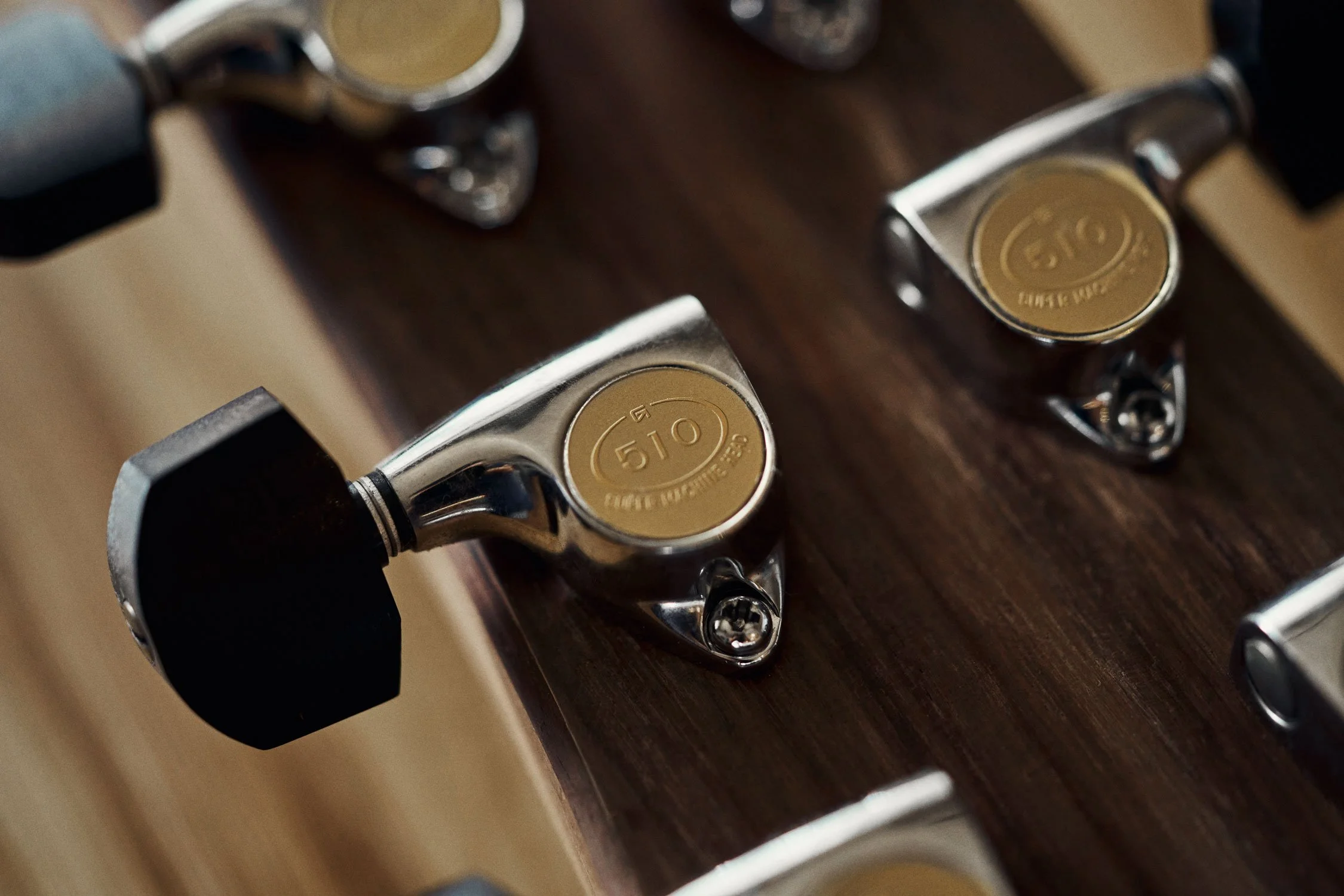
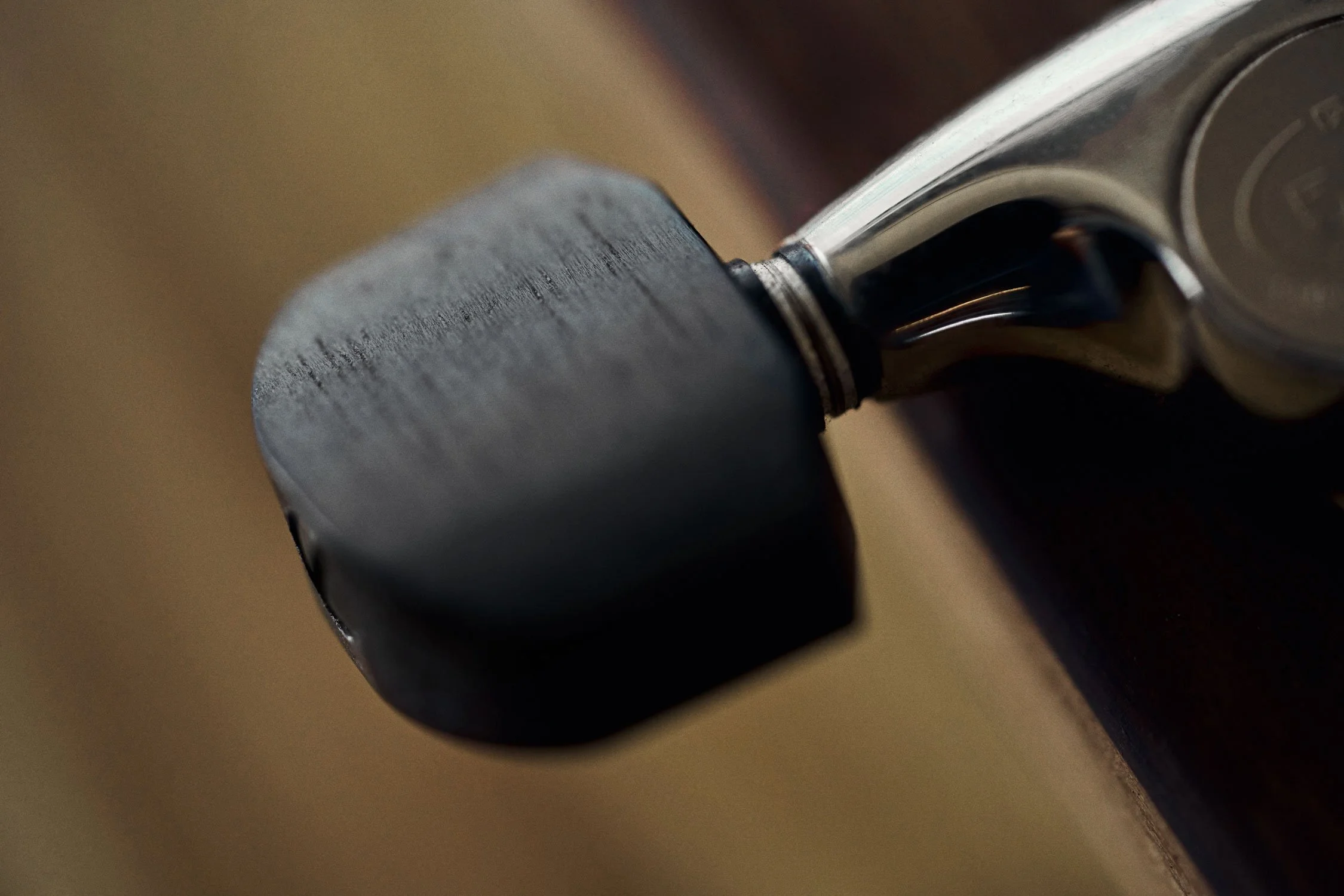
The first thing a person notices, handling a Gotoh machine head for the first time, is the resistance. Not stiffness. Resistance, which is a different quality. The button turns with a consistency that suggests every internal surface has been accounted for.
On Gotoh machine heads, and sixty years of precision in one city.

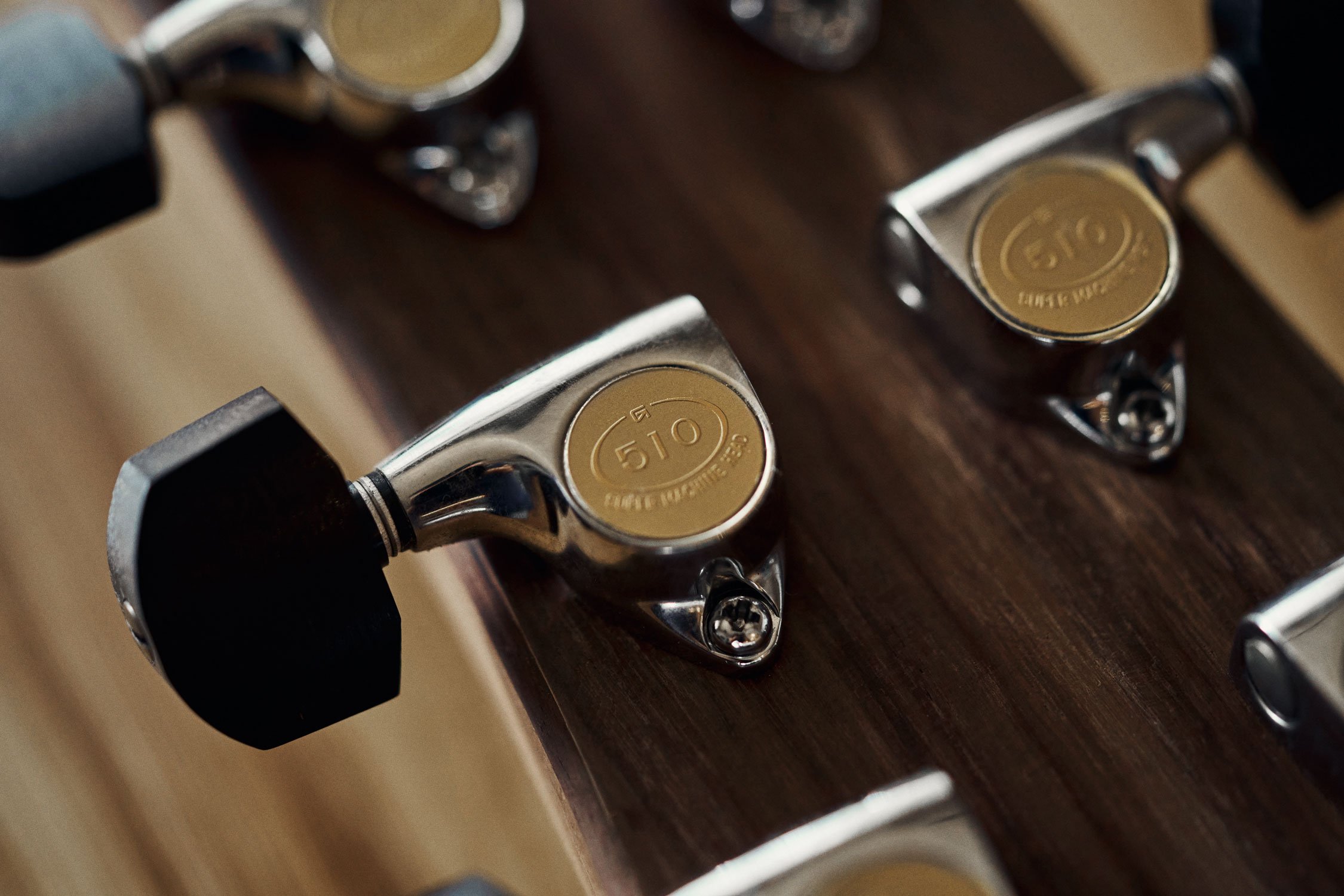
Gotoh Magnum Lock Mechanism
The first thing a person notices, handling a Gotoh machine head for the first time, is the resistance. Not stiffness. Resistance, which is a different quality. The button turns with a consistency that suggests every internal surface has been accounted for. There is no slack at the start of the turn, no dead zone where the mechanism gathers itself before engaging. It moves, and keeps moving, at the same rate throughout.
Someone building their first acoustic guitar will handle several sets of machine heads before making a decision. They will read specifications, compare prices, ask in forums where the answers arrive quickly and with confidence. And some will keep returning to the Gotoh. Not because the reviews are better, though they often are. Because of what the object communicates when held.
The mechanism is not complicated. A helical worm gear drives a toothed wheel on the string post. When the button turns, the worm advances the wheel by one tooth. The ratio between button turns and post revolutions determines the fineness of adjustment. What is harder to specify, and more important, is the consistency of the feel across that range of motion. There is no point in the turn where the mechanism feels different from any other point. No looseness at the start, no tightening toward the end. The quality of the action is the same from the first degree of rotation to the last.
“The assembled unit feels like a single thing rather than several things in contact.”
This consistency is what the hand is registering in those first moments with the object. Not a specification. Not a number. A uniformity that suggests every surface inside the housing has been held to the same standard. The assembled unit feels like a single thing rather than several things in contact. Whether that impression comes from the components themselves, the tolerances between them, or the quality of the assembly is not visible from the outside. The hand knows it without being able to explain it.
On the premium lines the buttons are ebony or bone. This is a decision about what the interaction should feel like, made for a component that is touched every time the instrument is tuned. Most manufacturers use plastic. The choice to use ebony or bone changes nothing about the mechanism inside. It is a decision about the quality of contact between the object and the hand, made for a part that most players never think about by brand. The grain of the ebony is visible in the button. The material does not pretend to be something else.
Gotoh Gut Co., Ltd. was founded in Nagoya in 1960. Nagoya sits at the centre of Aichi Prefecture, which accounts for a significant share of Japan's precision manufacturing output, anchored for decades by the automotive supply chain that runs through Toyota's operations. Gotoh is neither a craft workshop nor an industrial manufacturer in the automotive sense. It occupies a specific middle position, making one category of object, in one city, for sixty years.
The company's name does not appear in most musician-facing media. It appears in luthier forums, in repair technician shorthand, in the supplier catalogues of specialist instrument parts distributors. Guitar players interact with tuning machines in every session and rarely identify them by brand. The hardware sits beneath the instrument's visible identity, doing its work without being seen. Gotoh's market is primarily the people who build and repair instruments, not the people who play them. The name travels through the supply chain and stops there.
“The anonymity is structural. It is built into the position.”
This may be the condition that makes the work possible. A company that has been making one thing for sixty years in one city, selling primarily to people who will fit the component and then hand the instrument to someone else. The anonymity is structural. It is built into the position.
There is a set of Gotoh machine heads on a guitar somewhere right now, being tuned by a player who does not know the name on the component. The button turns with that particular resistance. The post moves. The player finds the pitch and moves on.
In Nagoya, the next set is already being made.
Writing / Photography
Rolling Standard / Jang
Below The Pushers
There is a particular quality to objects that don't perform. You notice it in a well-worn jacket, a kitchen knife that has been sharpened enough times to lose its original profile. The Speedmaster Reduced has that quality.
The Omega Speedmaster Reduced
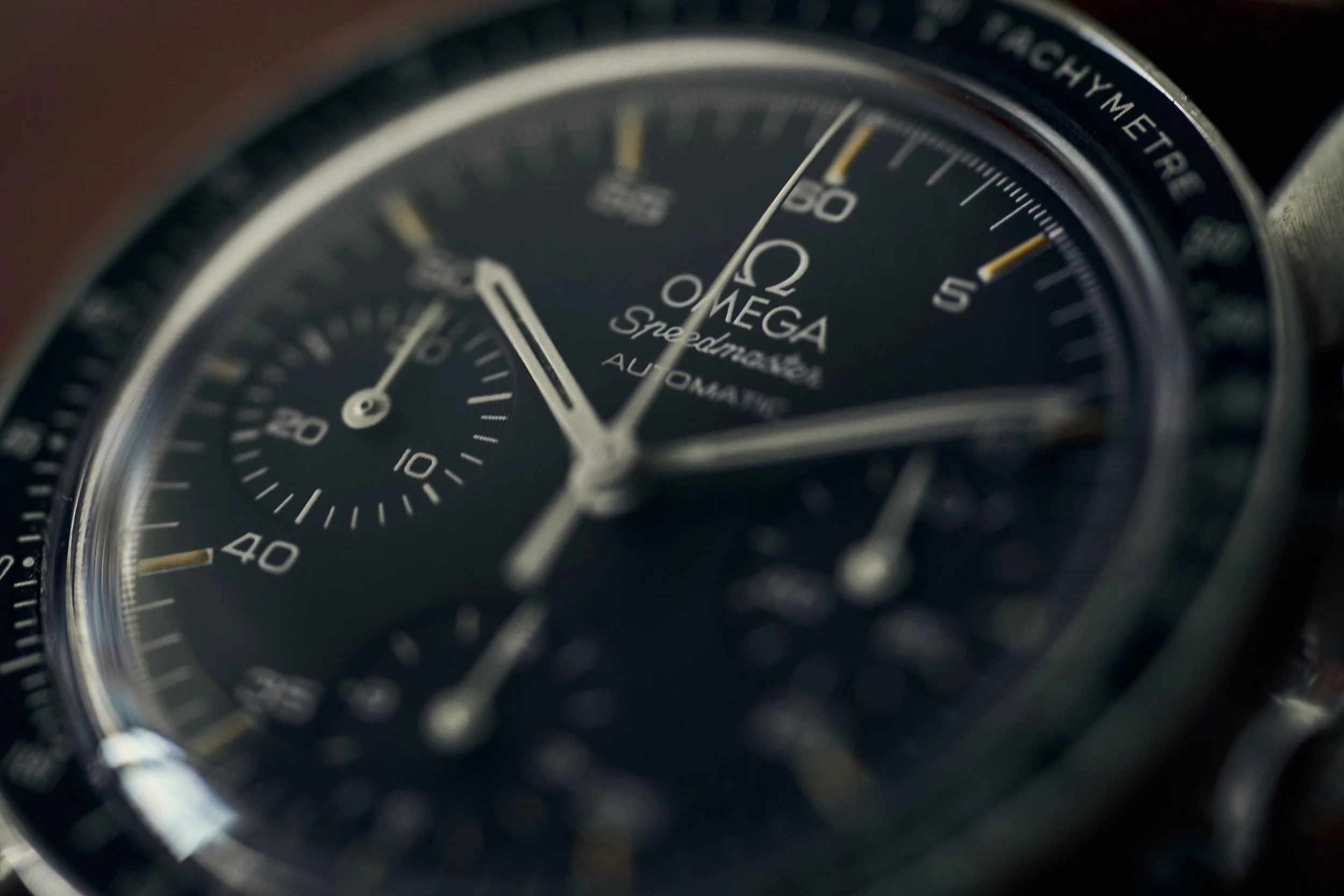
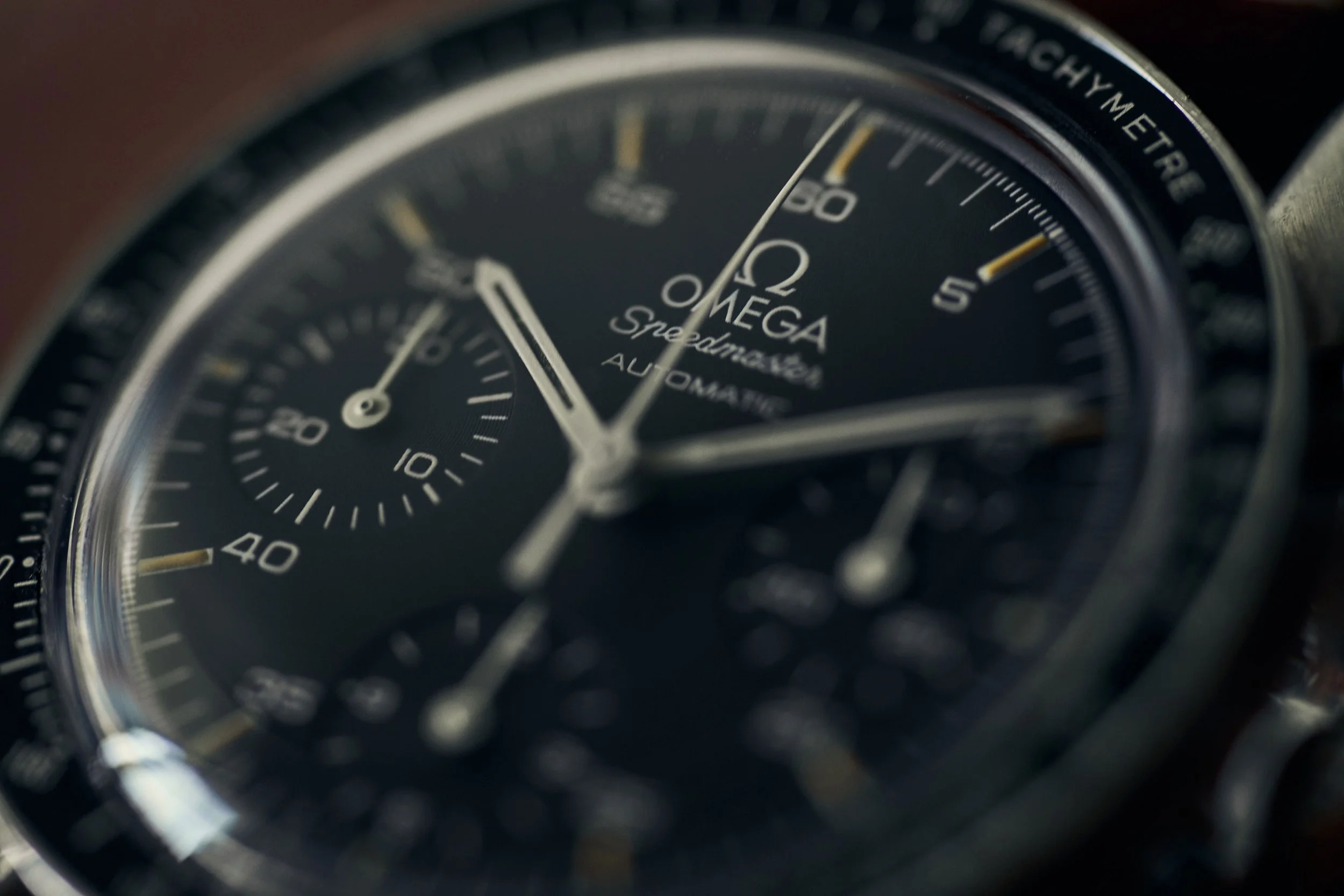
Closeup of Speedmaster Reduced dial
The crown sits below the pushers, the piggyback movement's polite concession to the case above it. It is the quietest thing about a watch full of quiet decisions. The case is 39mm, the tachymetre bezel carries its numbers in the same white print as every Speedmaster made before it, and the subdials sit where they always have, and the whole thing asks nothing of the room it's sitting in. This is a watch that has been somewhere, or is about to go somewhere, and is not concerned either way.
There is a particular quality to objects that don't perform. You notice it in a well-worn jacket, a kitchen knife that has been sharpened enough times to lose its original profile. The Speedmaster Reduced has that quality. It is recognisably itself from across a table and invisible from across a room, and both of those things are, depending on your disposition, a problem or the whole point.
“It is recognisably itself from across a table and invisible from across a room.”
Omega named it. Not collectors, not the secondary market, not the enthusiast press. The company looked at what it had made and called it the Reduced, and most naming conventions reach for aspiration: Professional, Seamaster, Constellation. This one reaches in the other direction. It tells you, before you've read a specification, that something has been taken away.
Three millimetres of diameter were taken away, and a hand-wound calibre, and the specific provenance that attaches to the watch NASA qualified at the Manned Spacecraft Center in Houston in 1965. The Reduced runs a calibre 3220, a column-wheel automatic derived from the ETA 7750 architecture. It is a capable, well-made movement, the product of the same craft culture that underpins most Swiss chronograph production of its era. It has no story attached to it. Omega never tried to give it one.
The name is, in this light, honest in a way that product naming rarely is. It does not say lesser. It says: here is the thing, and here is what it is not. You can decide what to do with that information.
What remains when you subtract the provenance, the lineage, the qualification history, is still a Speedmaster. The case silhouette is the same. The bezel is the same. The dial architecture reads as the same watch to anyone who hasn't looked closely, and reads as a different watch entirely to anyone who has. That gap, between the two readings, is where the Reduced lives.
“The name does not say lesser. It says: here is the thing, and here is what it is not.”
The person who buys a Speedmaster Reduced in the knowledge of what it is has made a specific kind of decision. They know the Professional exists. They know the calibre 1861 exists. They know that the watch on their wrist has no NASA certification and no moon landings attached to it. They chose it anyway, and they are not explaining themselves to anyone.
The Professional supports a type of ownership that depends on external infrastructure: the history being known, the provenance being legible, the object being recognisable to people who know what to look for. Wearing one is a participation in something larger than the watch itself, and that is not a criticism. It is simply what the object is.
The Reduced doesn't offer that. It appeared in Omega's catalogues as a variant, a quieter option, and the brand's own communications kept it in the shadow of the Professional throughout its production life. It was available, and then it wasn't, and in between those two facts it was simply a watch that some people bought and wore.
The disposition required to find that appealing is something closer to a comfort with one's own assessment. The person who wears a Reduced has looked at it and decided it's the right watch for reasons that don't require anyone else's agreement. That kind of ownership doesn't announce itself. It is just a watch on a wrist, worn by someone who chose it without needing to explain the choice.
In 2011, the Reduced stopped appearing in Omega's catalogues. There was no press release, no limited farewell edition, no acknowledgment of any kind. The watch had been in continuous production since approximately 1988, and then it was simply no longer available.
Brands typically mark the end of a product line. A discontinuation is an opportunity: a final run, a commemorative reference, a press note that ties the ending to the beginning. Omega did none of this. The Reduced ended the way it had existed, without ceremony, without a story being made of it.
The watch on the wrist is the same watch it was before the discontinuation. The calibre 3220 runs the same way. Nothing about the object is different because it is no longer being made. But there is something clarifying about the way it ended. It came and went on its own terms, which were, in a sense, no terms at all. The watch was always asking nothing. The ending asked nothing either.

Seen from the side, the Reduced reveals something the dial view withholds. The case profile is the Speedmaster shape carried forward largely intact from the 1960s: the downward slope from bezel to lug, the pushers sitting flush with the case middle, the crown at three o'clock positioned with the same considered restraint as the rest of the design. The case wears its depth honestly. From this angle the tachymetre bezel reads as a deliberate frame rather than an ornament, and the relationship between the lugs and the case middle has the proportion of something that was drawn once and not revised.
On a wrist, moving through an ordinary day, the Reduced looks like a watch. Not a statement, not a signal. The subdials read the seconds and the elapsed minutes and the hours. The calibre 3220 winds itself with the mobility of the day and keeps time the way well-made mechanical things keep time: steadily, without drawing attention to the fact.
“The watch was always asking nothing. The ending asked nothing either.”
The person wearing it is not thinking about the calibre. They are thinking about where they are going, or what they need to do when they get there, or nothing in particular. The case catches the light the way brushed steel does, neither asking to be noticed nor retreating from it. The watch is not waiting to be understood.
Writing / Photography
Rolling Standard / Jang
Forward is
a Direction
The choice was never only left or right.
Subscribe to our newsletter.
Sign up with your email address to receive news and updates.