Burano, The Island Cars Never Reached
On the northern Venetian lagoon, movement is organised around water, walking, and whatever the tide allows.
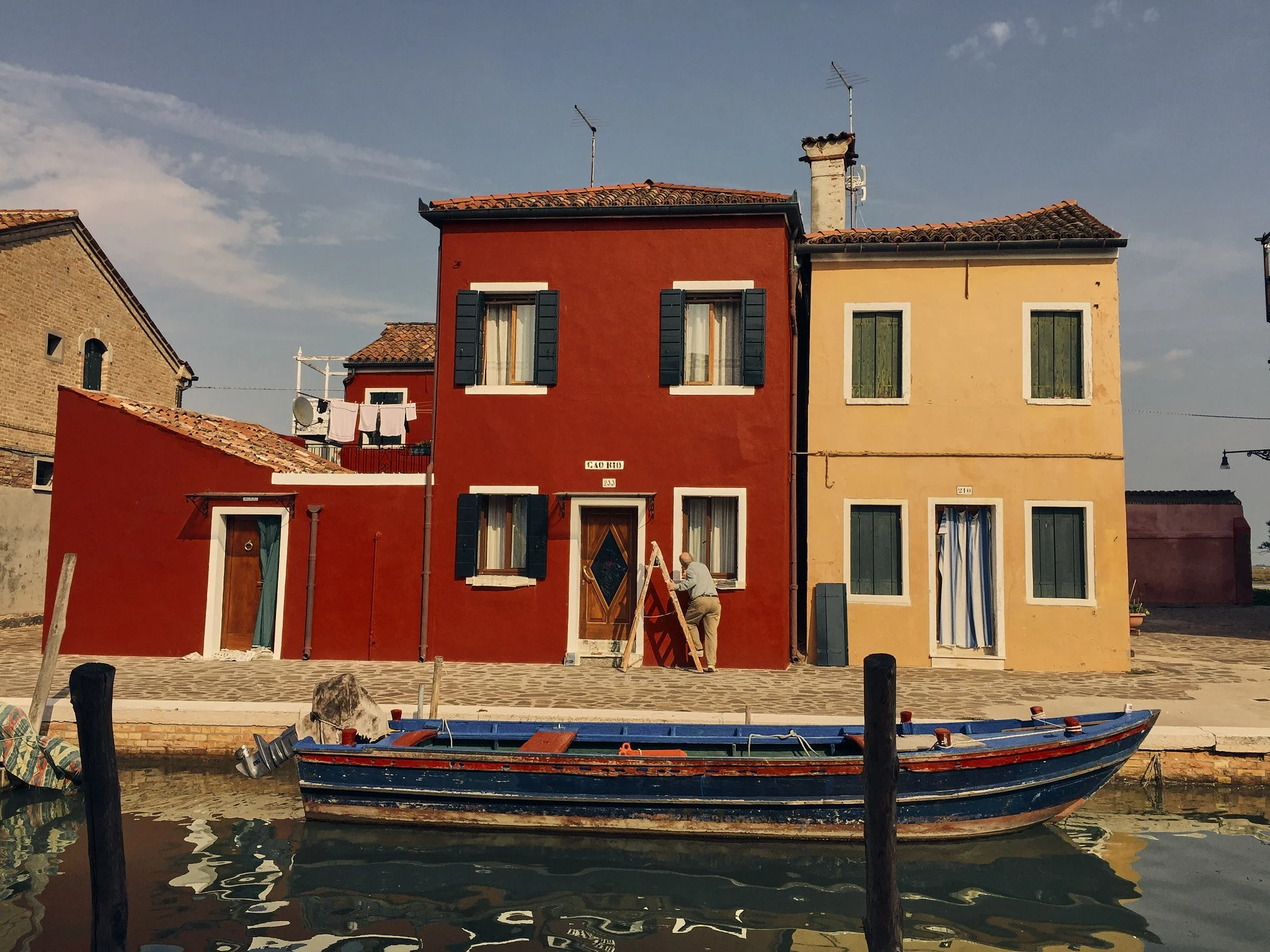
Man on ladder
The vaporetto from Fondamente Nove takes forty-five minutes. The lagoon in the northern stretch is shallow and largely featureless, the horizon low, the water the colour of old pewter. You simply leave one place and, after enough time on open water, arrive at another.
Burano is small enough to walk its length in twenty minutes. There are no cars. There have never been cars. The canals are the roads, and the boats moored along them are what a van parked outside a tradesman's house is everywhere else. Flat-bottomed sandoli, built for the shallow northern lagoon, low draft and wide beam, covered with tarpaulins, tied to iron rings in the stone. Practical objects in a practical place.
“On foot, you move at the speed of decision.”
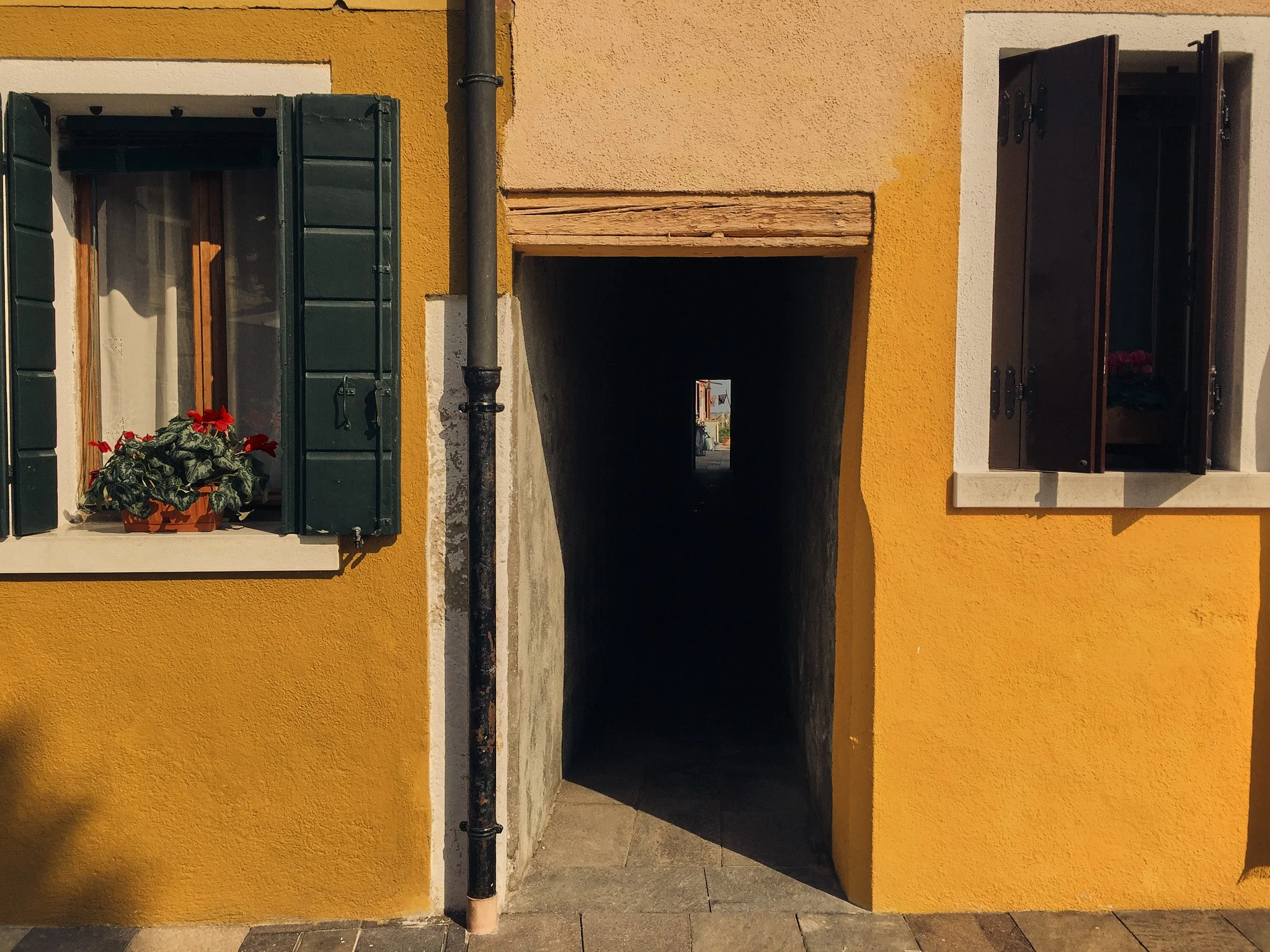
On foot, you move at the speed of decision. You turn into a passage cut through a yellow wall and at the far end there is a rectangle of colour and light, another canal, another set of moored boats. The island reveals itself one threshold at a time. There is no way to shortcut this.
Somewhere in the middle of the island, on a canal whose name does not appear on most maps, a man is on a ladder working on his front door. His boat is moored directly below him in the canal. His laundry is on the rooftop above. Three layers of ordinary life arranged vertically, the way life arranges itself when there is no horizontal sprawl available. He is not performing for anyone. The work is the door. The boat is there because it is his. The laundry is drying because it is Tuesday.
Without a car, everything reorganises around walking distance. The boat is not a commute. It is parked outside the front door the way a car would be, except the door opens onto water.
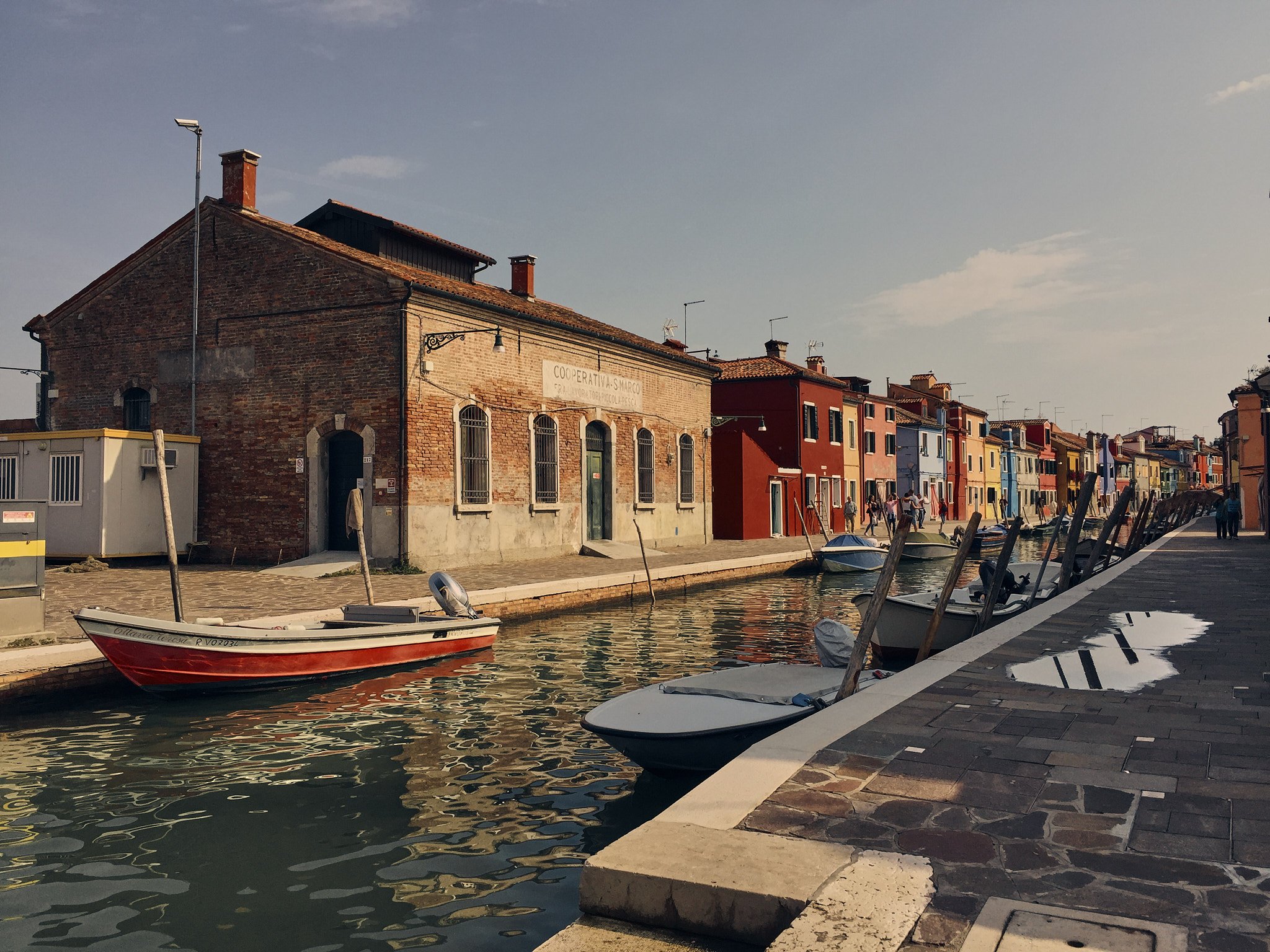
The Cooperativa S. Marco sits on a wider canal, its brick facade and faded sign facing the water. Working boats along the edge. The coloured houses receding behind it. This is the island that exists beneath the version most people come to see. It is not hidden. It is simply present at a different register, visible to anyone who stays long enough to stop looking for something else.
“Not as decay. As record.”
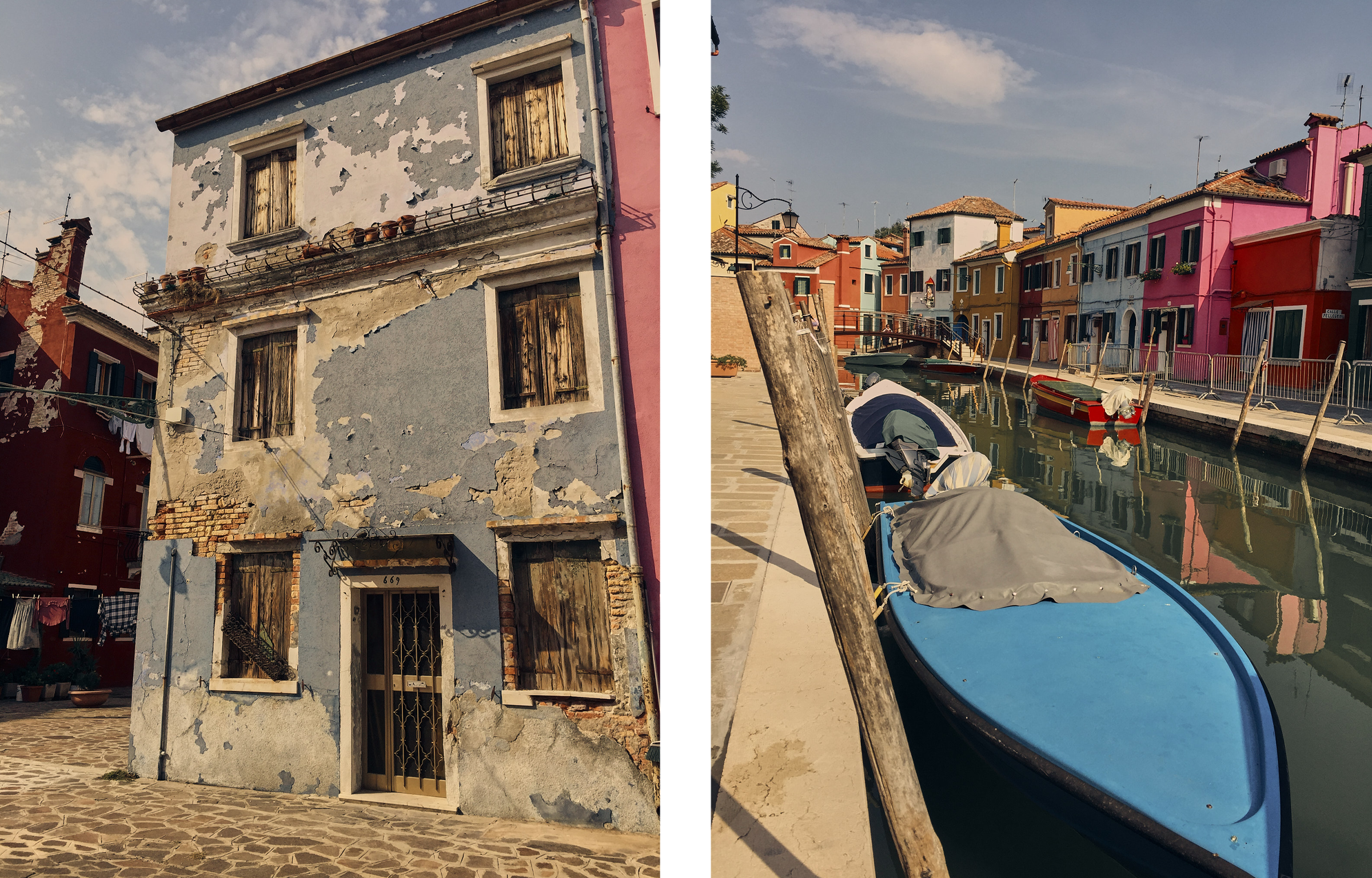
At number 669, the paint is peeling back through layers. Yellow to plaster to brick. Each layer a different decision made in a different decade by someone who lived there and needed the wall to hold. Laundry on a wire to the left. The building shows time and use the way a well-worn machine does. Not as decay. As record.
The population has dropped from nine thousand to under three thousand since mid-century. The island was built for more people than live here now. It shows. But it is not a museum. People still work here, still moor their boats, still hang their laundry.
Things move even when they do not travel.
Writing / Photography
Rolling Standard / Jang