The Button Turns, With a Certain Resistance
On Gotoh machine heads, and sixty years of precision in one city.
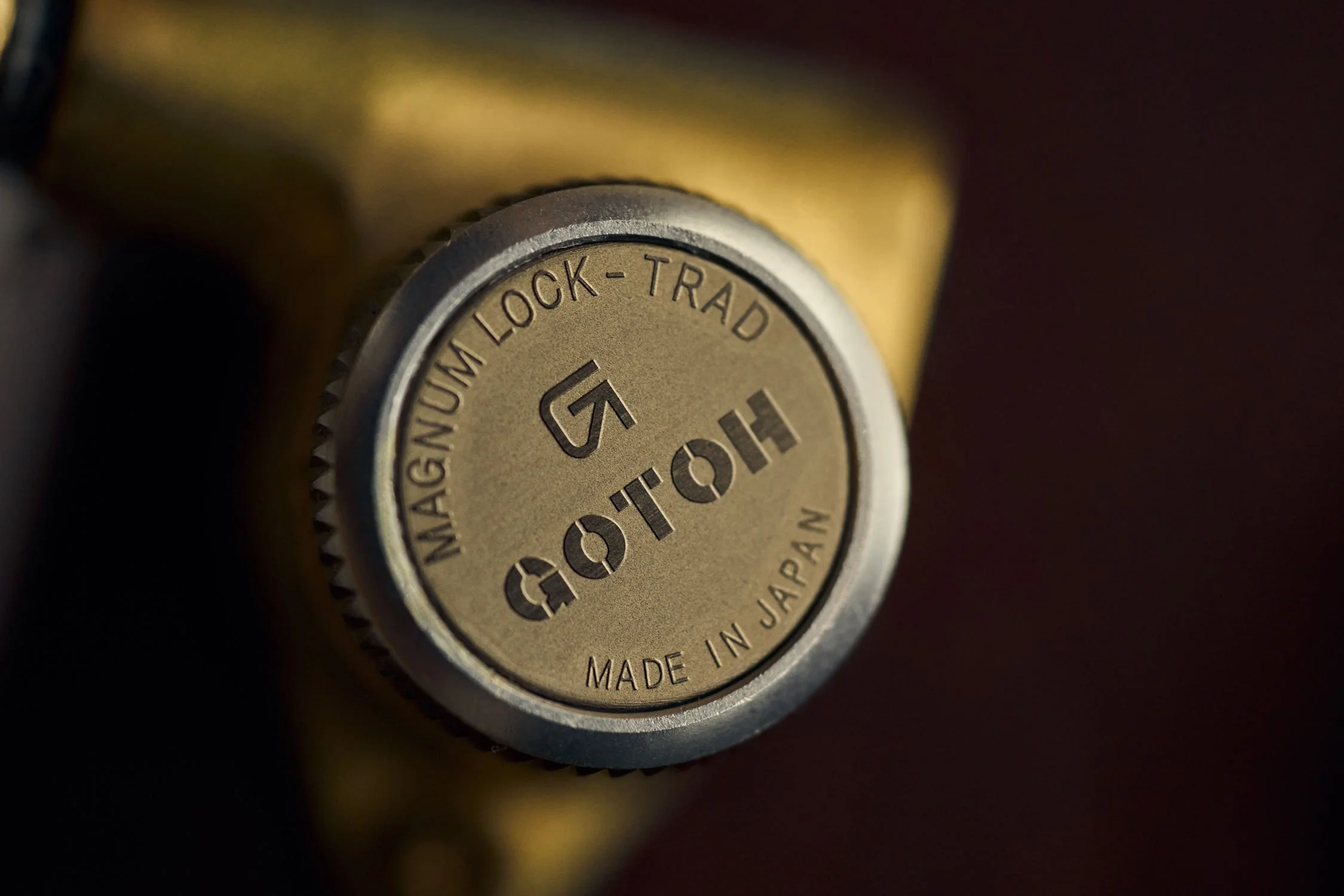
Gotoh Magnum Lock Mechanism
The first thing a person notices, handling a Gotoh machine head for the first time, is the resistance. Not stiffness. Resistance, which is a different quality. The button turns with a consistency that suggests every internal surface has been accounted for. There is no slack at the start of the turn, no dead zone where the mechanism gathers itself before engaging. It moves, and keeps moving, at the same rate throughout.
Someone building their first acoustic guitar will handle several sets of machine heads before making a decision. They will read specifications, compare prices, ask in forums where the answers arrive quickly and with confidence. And some will keep returning to the Gotoh. Not because the reviews are better, though they often are. Because of what the object communicates when held.
The mechanism is not complicated. A helical worm gear drives a toothed wheel on the string post. When the button turns, the worm advances the wheel by one tooth. The ratio between button turns and post revolutions determines the fineness of adjustment. What is harder to specify, and more important, is the consistency of the feel across that range of motion. There is no point in the turn where the mechanism feels different from any other point. No looseness at the start, no tightening toward the end. The quality of the action is the same from the first degree of rotation to the last.
“The assembled unit feels like a single thing rather than several things in contact.”
This consistency is what the hand is registering in those first moments with the object. Not a specification. Not a number. A uniformity that suggests every surface inside the housing has been held to the same standard. The assembled unit feels like a single thing rather than several things in contact. Whether that impression comes from the components themselves, the tolerances between them, or the quality of the assembly is not visible from the outside. The hand knows it without being able to explain it.
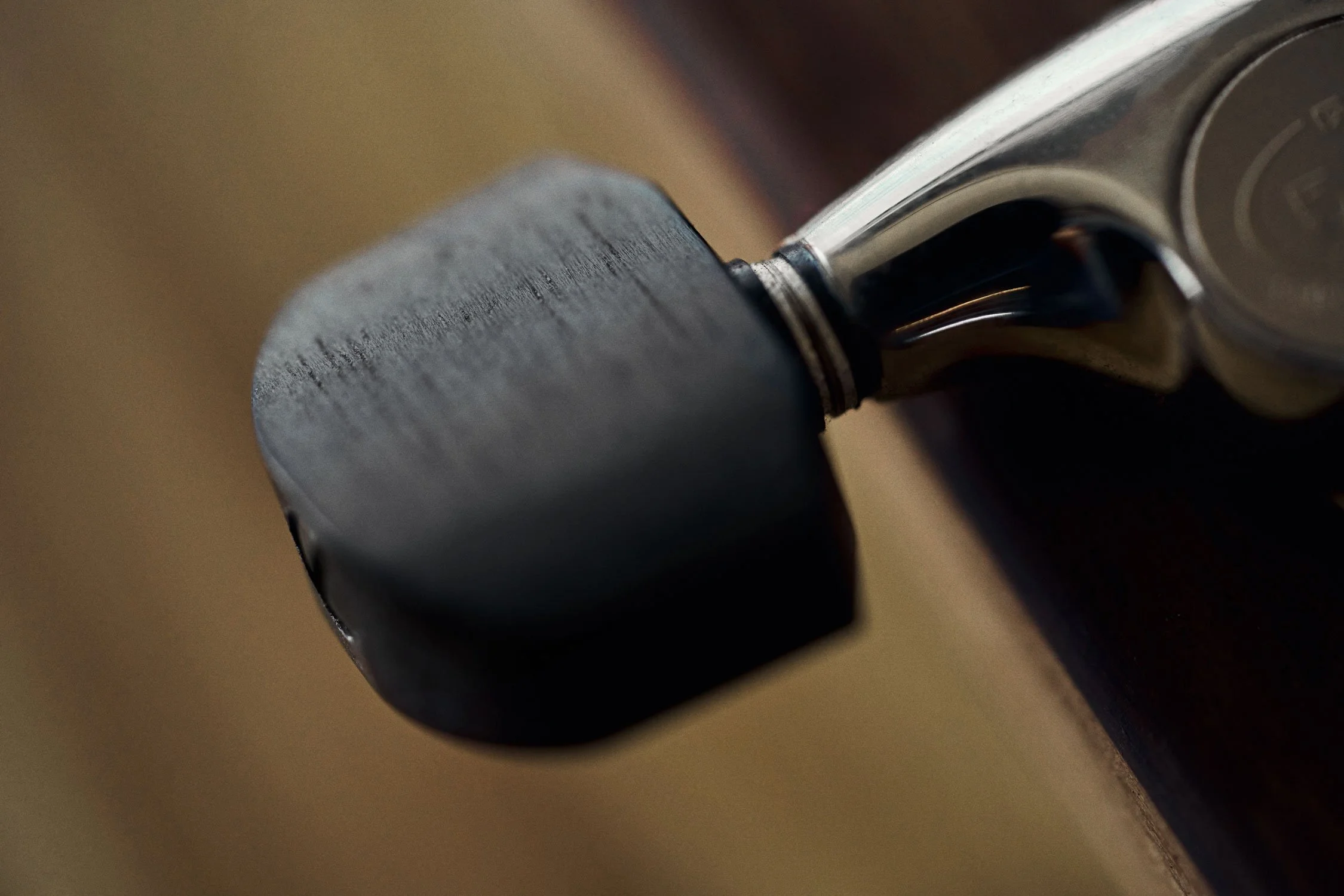
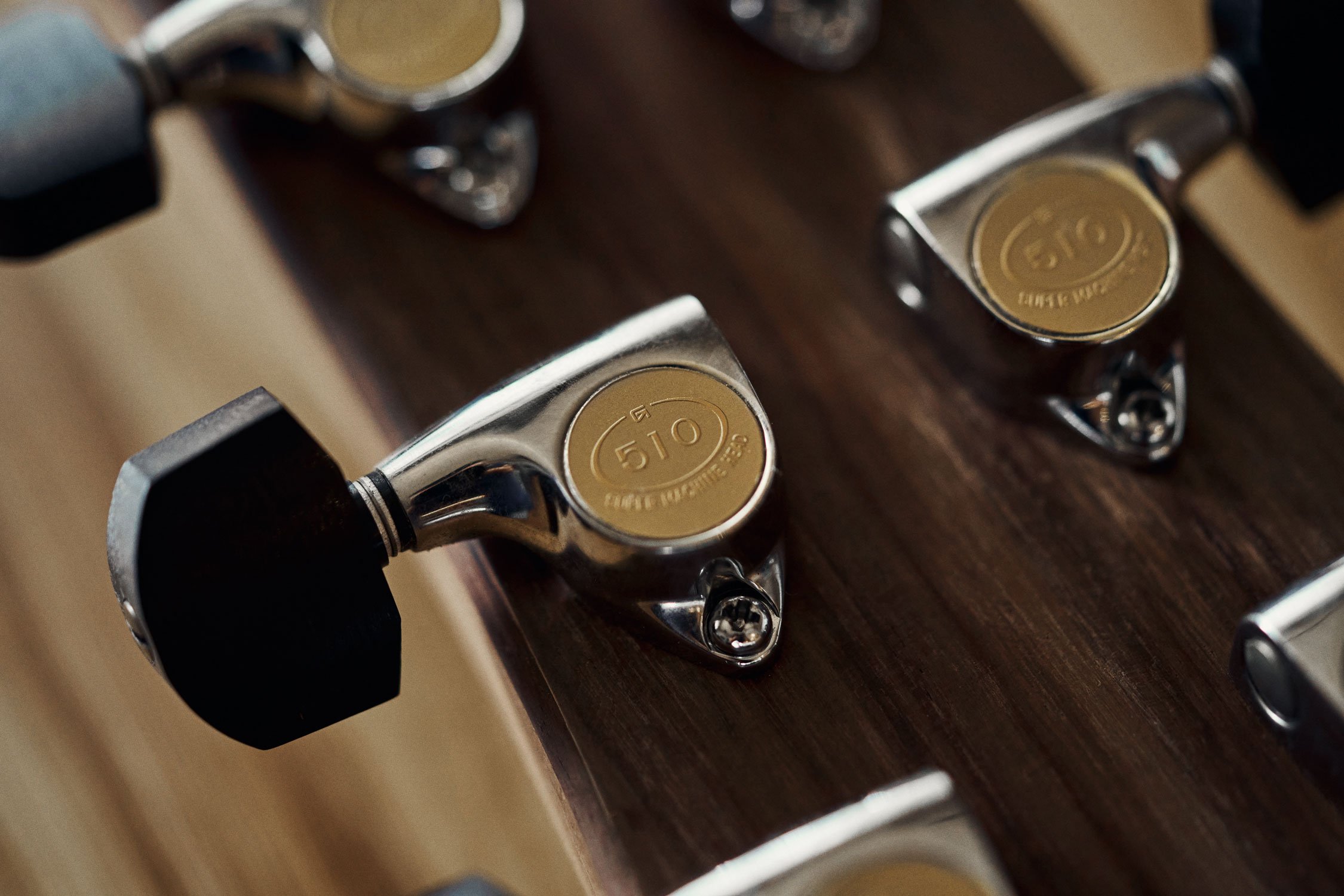
On the premium lines the buttons are ebony or bone. This is a decision about what the interaction should feel like, made for a component that is touched every time the instrument is tuned. Most manufacturers use plastic. The choice to use ebony or bone changes nothing about the mechanism inside. It is a decision about the quality of contact between the object and the hand, made for a part that most players never think about by brand. The grain of the ebony is visible in the button. The material does not pretend to be something else.
Gotoh Gut Co., Ltd. was founded in Nagoya in 1960. Nagoya sits at the centre of Aichi Prefecture, which accounts for a significant share of Japan's precision manufacturing output, anchored for decades by the automotive supply chain that runs through Toyota's operations. Gotoh is neither a craft workshop nor an industrial manufacturer in the automotive sense. It occupies a specific middle position, making one category of object, in one city, for sixty years.
The company's name does not appear in most musician-facing media. It appears in luthier forums, in repair technician shorthand, in the supplier catalogues of specialist instrument parts distributors. Guitar players interact with tuning machines in every session and rarely identify them by brand. The hardware sits beneath the instrument's visible identity, doing its work without being seen. Gotoh's market is primarily the people who build and repair instruments, not the people who play them. The name travels through the supply chain and stops there.
“The anonymity is structural. It is built into the position.”
This may be the condition that makes the work possible. A company that has been making one thing for sixty years in one city, selling primarily to people who will fit the component and then hand the instrument to someone else. The anonymity is structural. It is built into the position.
There is a set of Gotoh machine heads on a guitar somewhere right now, being tuned by a player who does not know the name on the component. The button turns with that particular resistance. The post moves. The player finds the pitch and moves on.
In Nagoya, the next set is already being made.
Writing / Photography
Rolling Standard / Jang