The revolution is yours to adjust.
The roads taken, the machines kept,
the people who know why.
People Machines Movement
Featured Posts


Machines at
Rest
What remains after the last journey.
Burano, The Island Cars Never Reached
There is a particular quality to objects that don't perform. You notice it in a well-worn jacket, a kitchen knife that has been sharpened enough times to lose its original profile. The Speedmaster Reduced has that quality.
On the northern Venetian lagoon, movement is organised around water, walking, and whatever the tide allows.
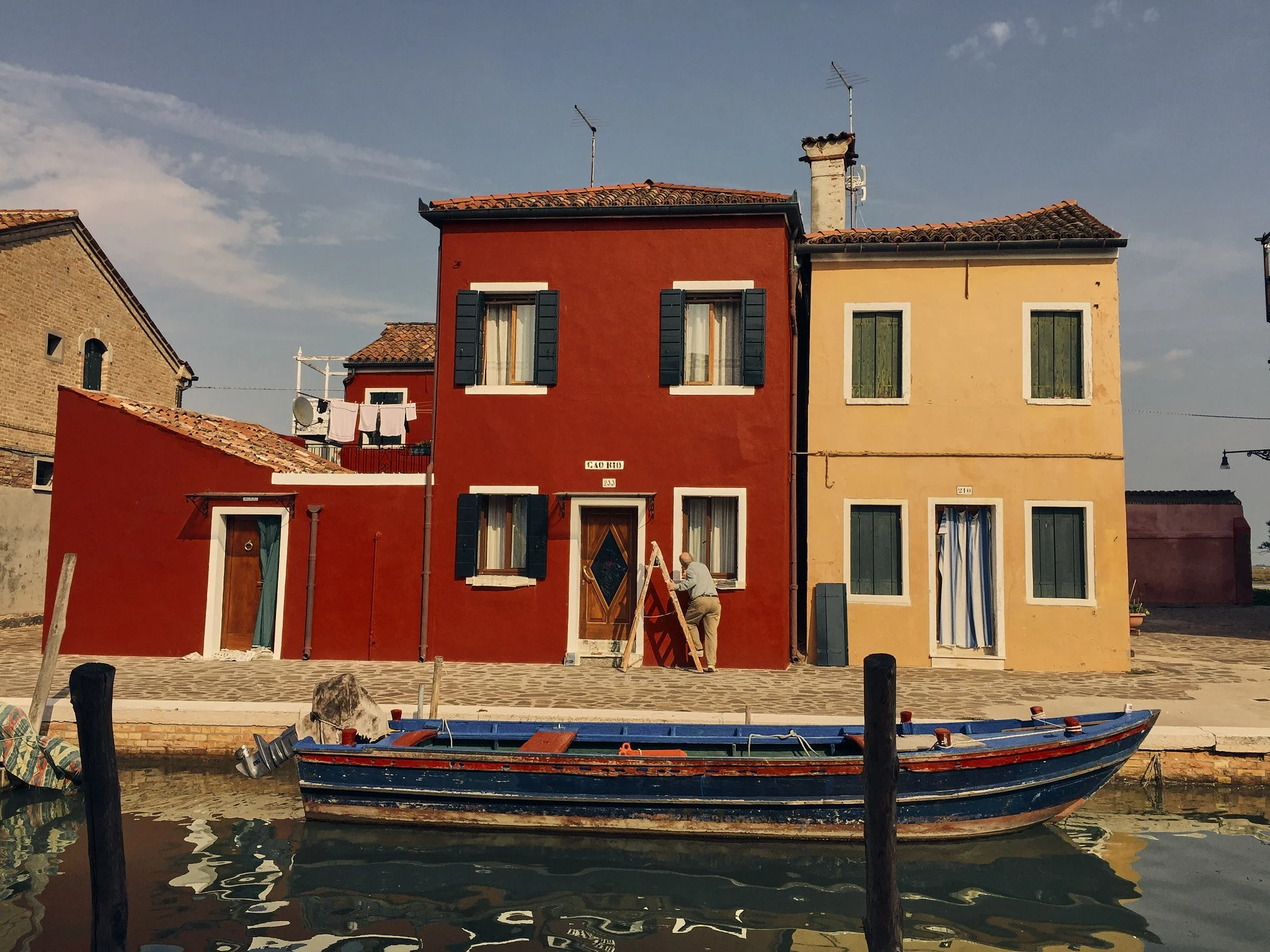
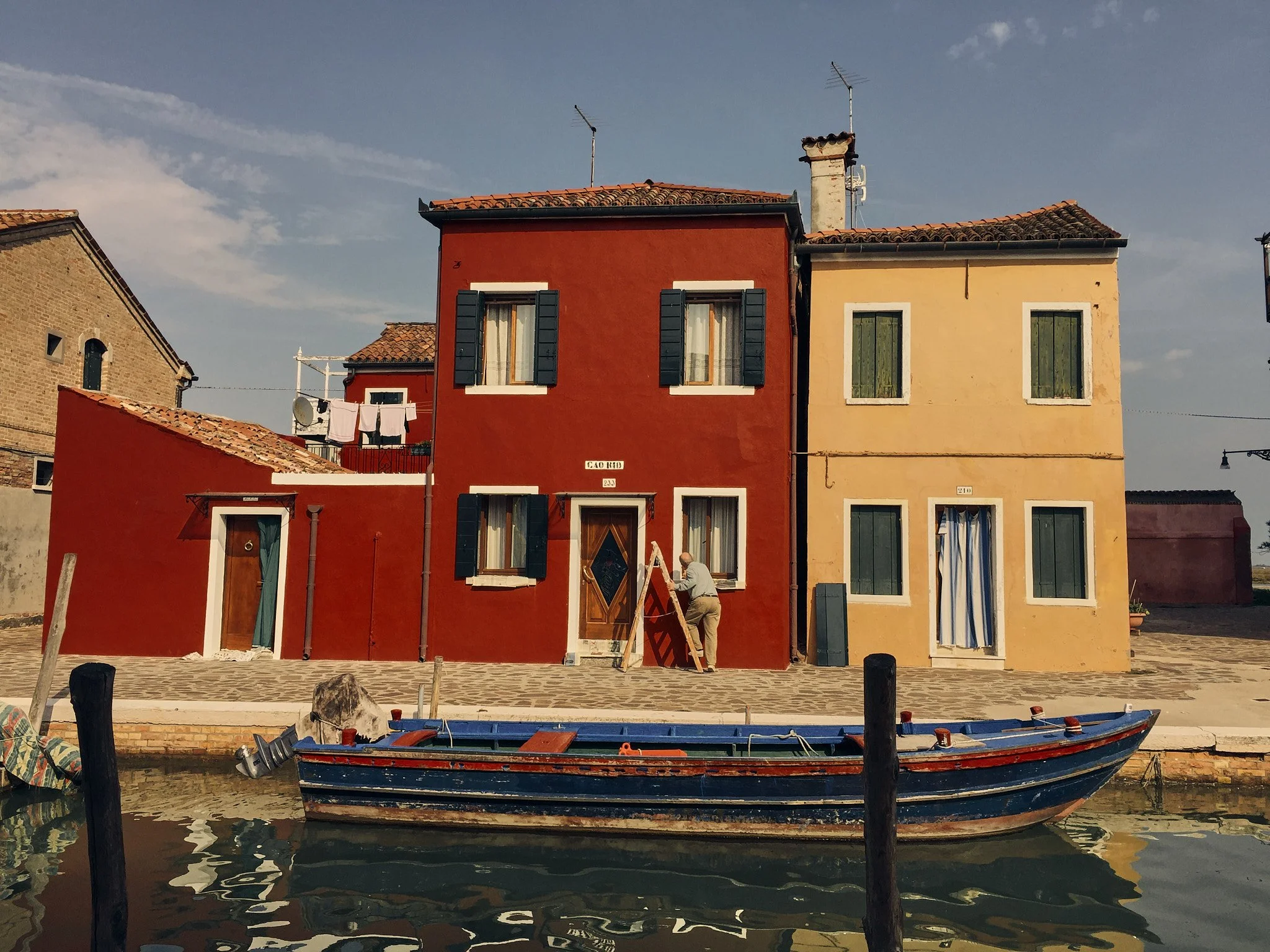
Man on ladder
The vaporetto from Fondamente Nove takes forty-five minutes. The lagoon in the northern stretch is shallow and largely featureless, the horizon low, the water the colour of old pewter. You simply leave one place and, after enough time on open water, arrive at another.
Burano is small enough to walk its length in twenty minutes. There are no cars. There have never been cars. The canals are the roads, and the boats moored along them are what a van parked outside a tradesman's house is everywhere else. Flat-bottomed sandoli, built for the shallow northern lagoon, low draft and wide beam, covered with tarpaulins, tied to iron rings in the stone. Practical objects in a practical place.
“On foot, you move at the speed of decision.”
On foot, you move at the speed of decision. You turn into a passage cut through a yellow wall and at the far end there is a rectangle of colour and light, another canal, another set of moored boats. The island reveals itself one threshold at a time. There is no way to shortcut this.
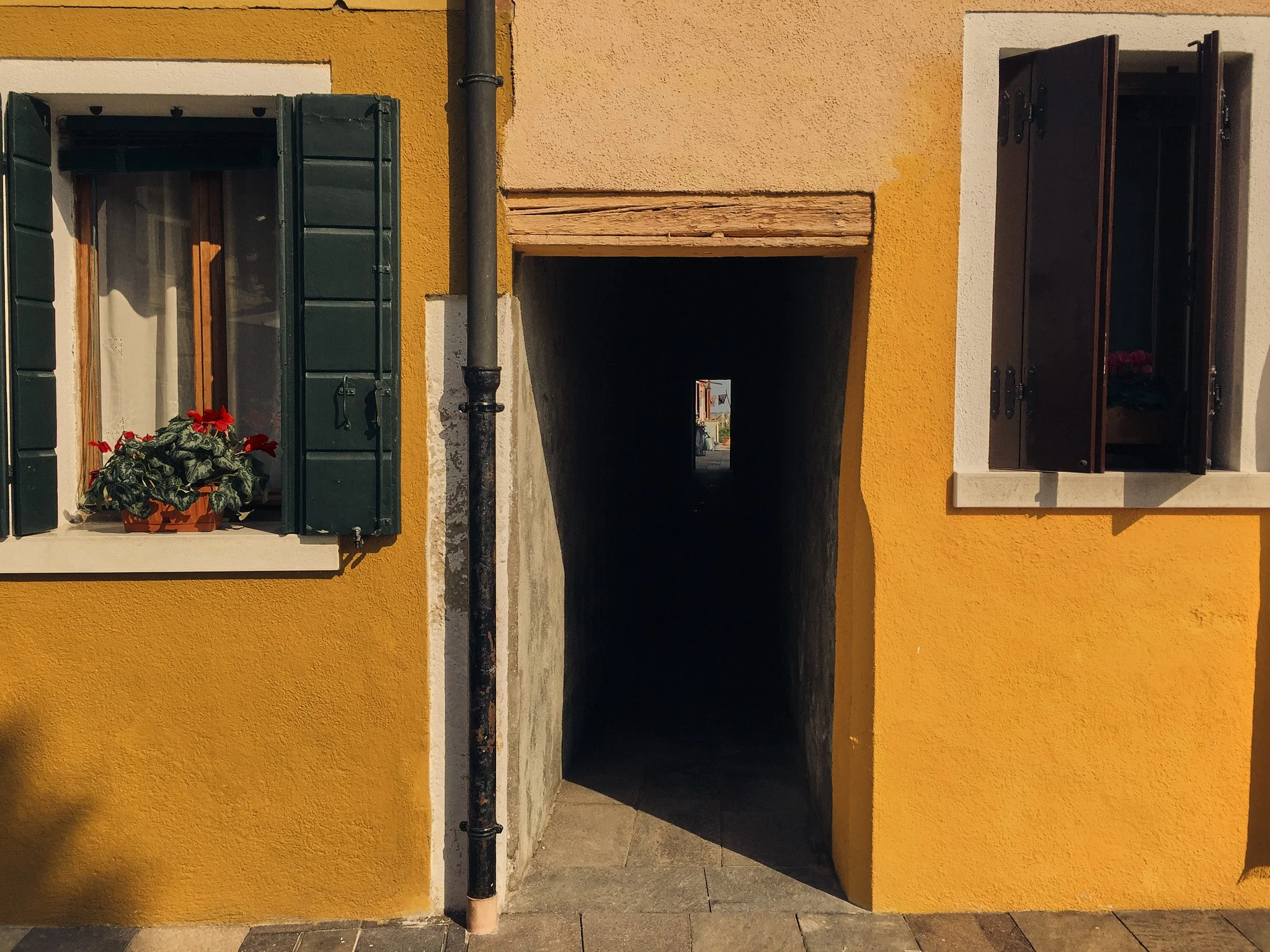
Somewhere in the middle of the island, on a canal whose name does not appear on most maps, a man is on a ladder working on his front door. His boat is moored directly below him in the canal. His laundry is on the rooftop above. Three layers of ordinary life arranged vertically, the way life arranges itself when there is no horizontal sprawl available. He is not performing for anyone. The work is the door. The boat is there because it is his. The laundry is drying because it is Tuesday.
Without a car, everything reorganises around walking distance. The boat is not a commute. It is parked outside the front door the way a car would be, except the door opens onto water.
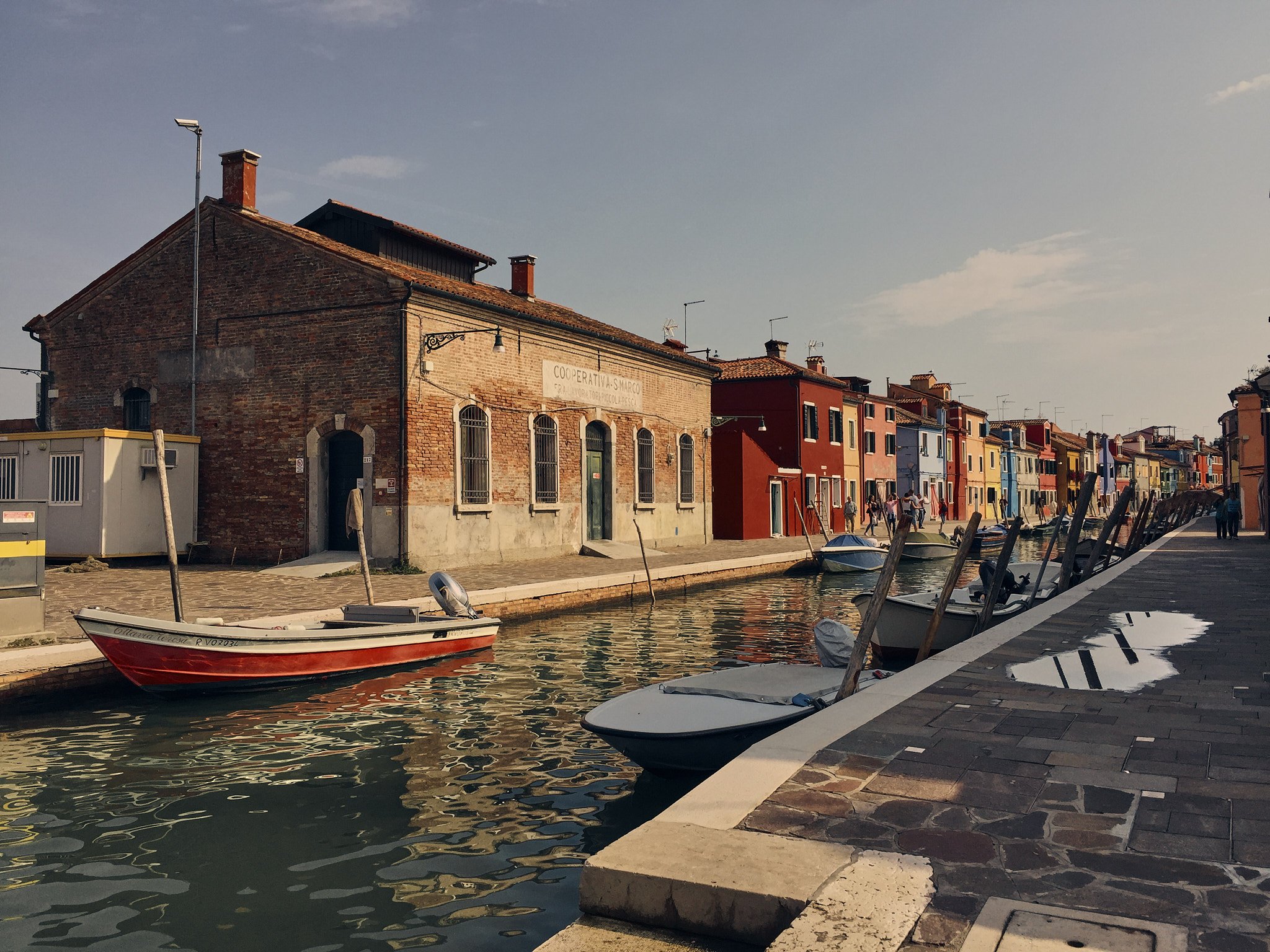
The Cooperativa S. Marco sits on a wider canal, its brick facade and faded sign facing the water. Working boats along the edge. The coloured houses receding behind it. This is the island that exists beneath the version most people come to see. It is not hidden. It is simply present at a different register, visible to anyone who stays long enough to stop looking for something else.
“Not as decay. As record.”
At number 669, the paint is peeling back through layers. Yellow to plaster to brick. Each layer a different decision made in a different decade by someone who lived there and needed the wall to hold. Laundry on a wire to the left. The building shows time and use the way a well-worn machine does. Not as decay. As record.

The population has dropped from nine thousand to under three thousand since mid-century. The island was built for more people than live here now. It shows. But it is not a museum. People still work here, still moor their boats, still hang their laundry.
Things move even when they do not travel.
Writing / Photography
Rolling Standard / Jang
The Tangent Revolution
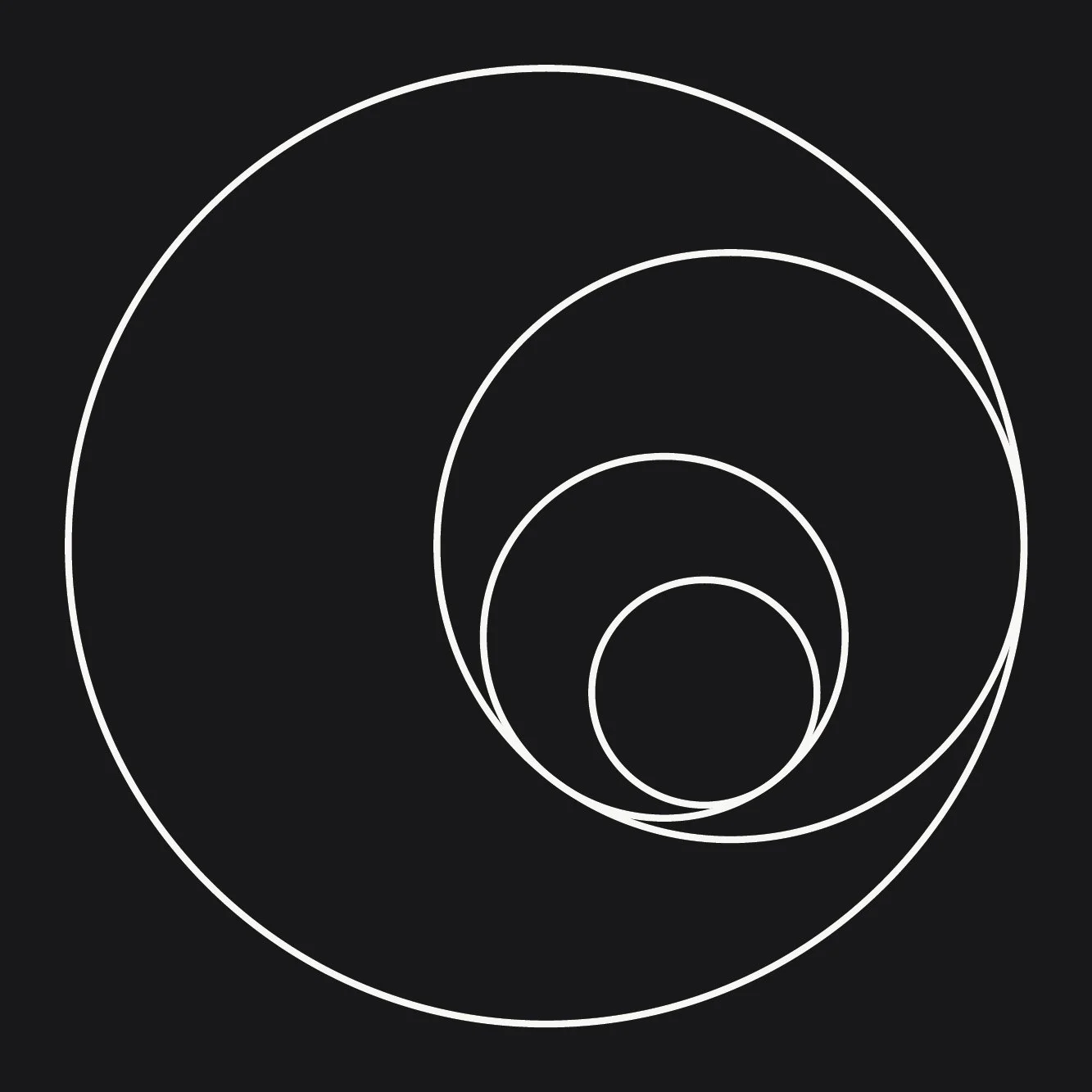
Four circles. Each rolling tangentially inside the one immediately larger. The three inner circles each carry something this platform is concerned with. The largest circle contains all of them. That circle is Rolling Standard.
On the geometry of things in motion within other things in motion, and the
mark that came from watching them.
Origin t = 0.0
There is a moment in the revolution of a smaller circle inside a larger one when the contact point is exactly at the bottom of the outer boundary. One point of tangency, the geometry momentarily as simple as it will ever be.
Then it moves. The contact travels. The smaller circle rolls on, and the point traces a path inward, curving back, arriving somewhere close to where it began but not quite there.
Whether it ever returns exactly depends on a single ratio: the radius of the outer circle divided by the radius of the inner. If that number is rational, the path closes. If it is irrational, the curve continues indefinitely, always approaching its own history, never repeating it.
The mathematics is settled. The motion is not.
This geometry has a name, hypocycloid, though the name is less important than what it describes. A smaller circle held inside a larger one, rolling against its inner boundary, tracing a path entirely determined by the relationship between the two. Nothing in the system moves independently. The smaller circle cannot go where the larger one does not allow. And within what is allowed, it traces something that no other ratio would produce.
Denys Fisher understood this well enough to build a toy from it. The Spirograph, patented in 1965 and first shown publicly at the Nuremberg Toy Fair that year, was a set of toothed plastic wheels and rings that allowed anyone to roll one circle inside another and watch the resulting curve appear on paper. Fisher was a British engineer. The toy eventually entered the permanent collection of the Museum of Modern Art in New York, which suggests that what he had built was not only a mechanical demonstration but something people found worth keeping.
The Spirograph made visible what is usually hidden inside housings and gear trains and watch plates.
Epicyclic systems appear throughout mechanical culture: in automatic transmissions, in bicycle hub gears, in the gear trains of mechanical watches. The terminology in planetary gearing, sun gear, planet gears, ring gear, comes directly from astronomy, borrowed from watching the sky and applied, eventually, to what happens inside a casing.
“The wheel must be close enough to the bearing to be guided by it, and far enough that it can turn without friction becoming resistance.”
Watchmakers speak about the relationship between a wheel and its jewelled bearing as a fit. The clearance is measured in microns. It is not a metaphor. The wheel must be close enough to the bearing to be guided by it, and far enough that it can turn without friction becoming resistance. Too tight and the movement stops. Too loose and the wheel wanders.
The fit is the tolerance within which the wheel can do what it is meant to do. The parts are described by what they engage with, not by what they do alone.
This is the distinction that matters.
Constraint implies a force applied from outside, something resisted. Holding implies a relationship, something that makes motion possible rather than limiting it. The gear does not fight the ring. The wheel does not resist the road. The smaller circle rolls against the inner boundary of the larger one, and the boundary is what makes the path.
“Nothing in them moves alone. The quality of a part is measured by how well it understands what it moves within.”
Rolling Standard came to its mark through this observation rather than toward it. The geometry was noticed in workshops and engine bays and the underside of watches before it was considered as a visual system. What kept returning was the relational quality of considered mechanical things. Nothing in them moves alone. The quality of a part is measured by how well it understands what it moves within.
Four circles. Each rolling tangentially inside the one immediately larger. The three inner circles each carry something this platform is concerned with. The outermost inner circle is Movement, the most expansive, closest to the boundary of what contains it. The middle circle is People, the human core around which everything else is organised. The innermost is Machines, the most specific, the detail that asks for close attention.
The largest circle contains all of them. That circle is Rolling Standard.
“The mark as it exists before anything has moved, and after everything has.”
The frozen position, called Origin, is the moment at which all four circles are in their purest geometric relationship. It is not the most complex position in the revolution. It is the most resolved. The mark as it exists before anything has moved, and after everything has.
Somewhere in the revolution, the contact point is moving along the boundary right now. It has been there before, or close enough that the difference is too small to see.
It will continue. The relationship holds.
Writing / Photography
Rolling Standard / Jang
Forward is
a Direction
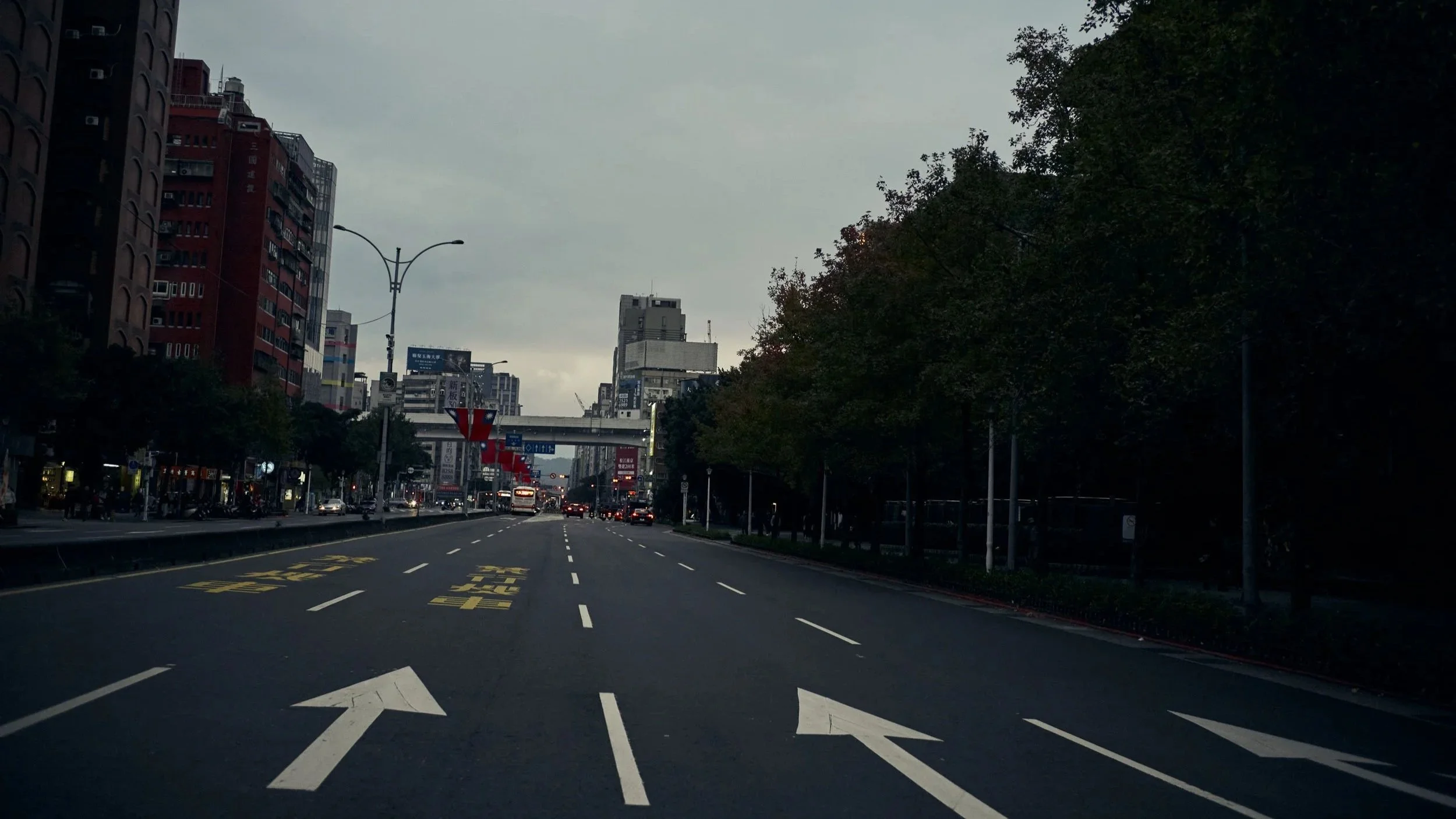
The choice was never only left or right.
Subscribe to our newsletter.
Sign up with your email address to receive news and updates.